

In the vibrant French city of Bordeaux, a little off the typical tourist route is a former convent that contains the only Renaissance era cloister in Aquitaine. Apparently it is only open to the public a few days per year, but in 2001 my wife and I were able to take a tour. Most of it was a blur looking back, and the tour was in French, with my wife translating as much as she could, but it’s one of those off the beaten path moments that makes travel so much fun.
When I began to research the history of the convent, I found a similar situation to our tour, in that most of it is in French. Bordeaux’s Couvent des Annonciades is unassumingly located along rue Magendie. It is not very big, but has an interesting history worth sharing even if it does not make anyone’s top tier list of attractions.
About The L’Annonciades – Order of the Annunciation of the Blessed Virgin Mary
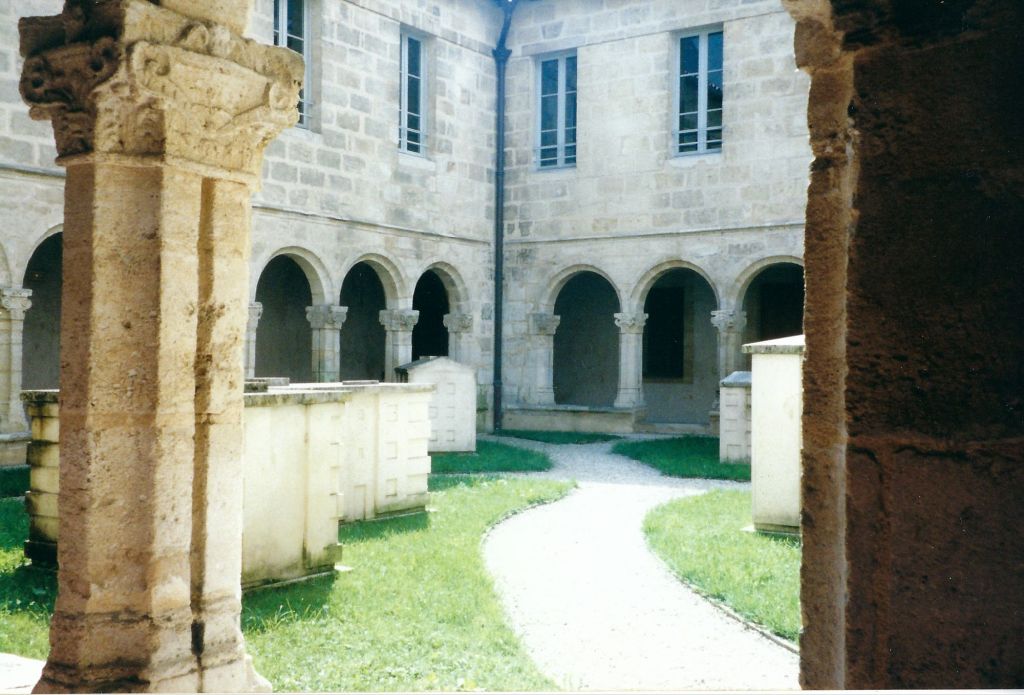
Credit: The Historical Vagabond
The Sisters of the Annunciation are a religious congregation better known in France as L’Annonciades. Joan of France, daughter of King Louis XI founded the Order at Bourges in 1501 based on the Franciscan Rule. The Sisters are dedicated to the Annunciation of the Angel Gabriel to the Blessed Virgin Mary and are a cloistered, or enclosed community. At their height before the French Revolution, there were over 40 Annonciade monasteries in France. The Annonciades survived the suppression of the religious orders during and after the Revolution and currently have 80 members spread over seven monasteries. The Order still has four monasteries in their native France.
The History as a Convent
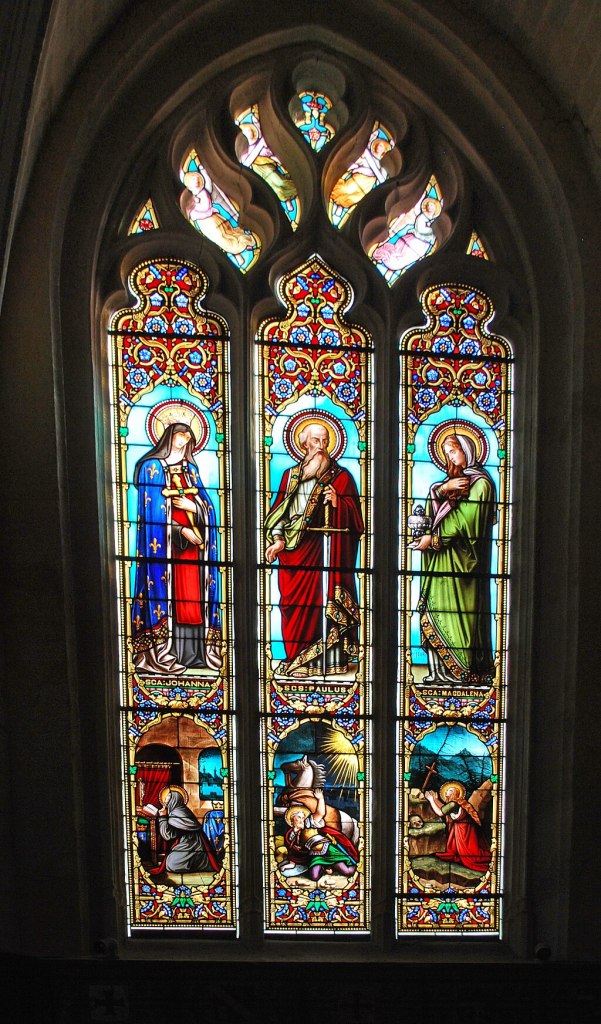
Credit: William Ellison, CC BY-SA 4.0
The Annonciades had their third house built in 1519, in the Bordeaux Parish of Sainte-Eulalie, close to the City’s south wall, under the directive of Jacquette de Lansac. This influential mistress of King Francois I had the convent built to house seven sisters from the second Annonciade convent at Albi. The order is comprised of contemplative nuns, cloistered away from the outside world and so hired Marc-Antoine de Serris to act as a liaison with the carpenters and masons to construct the monastery.
Mathurin Galoppin was signed on as the master mason and in July 1521, cloister and chapel were blessed but construction continued until 1528 under Guillaume Médion. In 1532 Jacquette de Lansac died and was entombed at the convent per her wishes.

Credit: Fabien.lotte, CC BY-SA 3.0, via Wikimedia Commons
The convent was completed at the dawn the religious wars of the Protestant Reformation and in 1557 several of the nuns left the Order. The Annunciation Sisters were joined by members of the local Poor Clares after the destruction of their monastery in 1575. This made the Couvent des Annonciades the only women’s convent in Bordeaux. The makeup of the convent was composed of women from aristocratic backgrounds and as the their numbers grew, so too did the question on how “cloistered” the nuns actually were. By the early 1600’s, Bordeaux’s Cardinal de Sourdis called for reform.
The Cardinal would enforce the Rule of the Order on the nuns while also sending some of the Sisters to other convents. The few remaining Sisters were finally driven out in 1792 during the French Revolution. The complex was secularized like many religious buildings and became a warehouse for storing saltpeter and a gunpowder factory. The former convent would eventually revert back to a religious role, but now as a House of Mercy.
The Sisters of Miséricorde
In 1808 the convent was bought by Marie-Thérèse Charlotte de Lamourous, a former member of the underground Catholic movement in France and founder of the Community of Mercy. The complex would now be a refuge for repentant prostitutes, starting with 90 women. During the renovations, Emperor Napoleon visited Bordeaux and supplied the needed funds for the Maison de La Miséricorde. The convent was operated by the Ladies of Mercy until 1971, housing hundreds of boarders before the organization sold the property.
Secularization, Restoration and Reuse
Thus begins the modern history of the former convent. In the 1970’s the complex became an archival repository for the Ministry of Justice. The entire complex of the Convent of the Annunciation received historical landmark status in 1974, shortly before the Ministry of Cultural Affairs chose the site to consolidate their regional offices around Bordeaux.
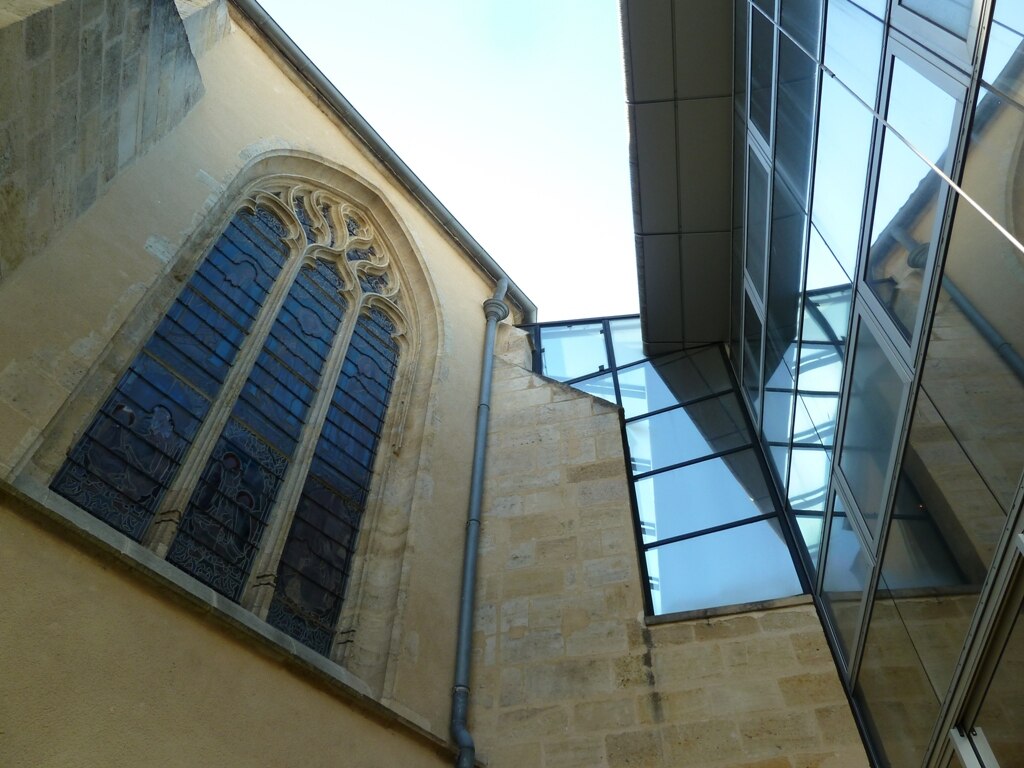
Credit: Morgane Rosendale, CC BY-SA 3.0 , via Wikimedia Commons
A major renovation project was begun in 1989 using the architectural firm BLP & Associes, in collaboration with the Historical Monuments Service and Chief Architect Pierre Colas. Work was completed in 1995 and the former Couvent des Annonciade was transformed and modernized enough to accommodate new uses. The Regional Directorate of Cultural Affairs of Aquitaine occupies the eastern part of the former convent while the western section now houses a daycare center.
What Visitors Can See Today
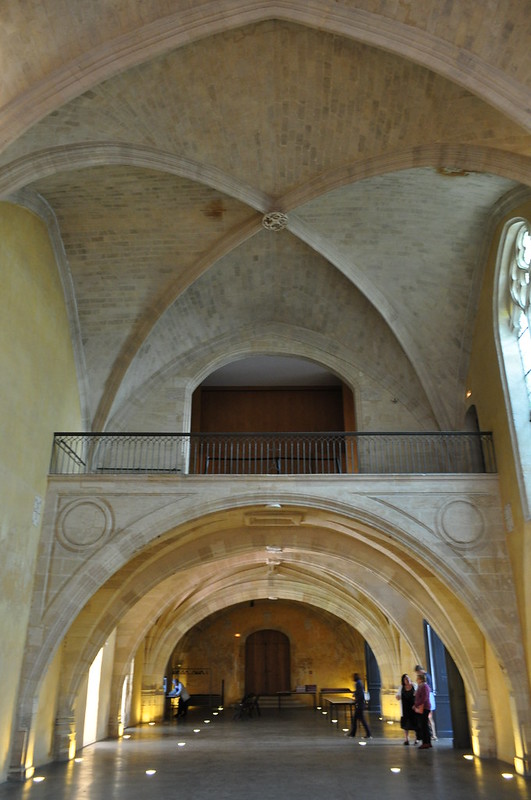
Credit: Bernard Blanc CC BY-NC-SA 2.0 via Flickr
The former convent is now a modern working space for the Ministry of Cultural Affairs. It is open to the public on Heritage Days only and can be visited with a guided tour. The cloister and chapel are accessible but visitors will also be able see parts of the modern complex as well.
The interior houses two small side chapels, with some very nice stained glass windows in the apse One of the side chapels contains a very nice sculpture of Christ’s tomb dating from the 16th century. The unique half-moon portal acts as a balcony above the chapel.
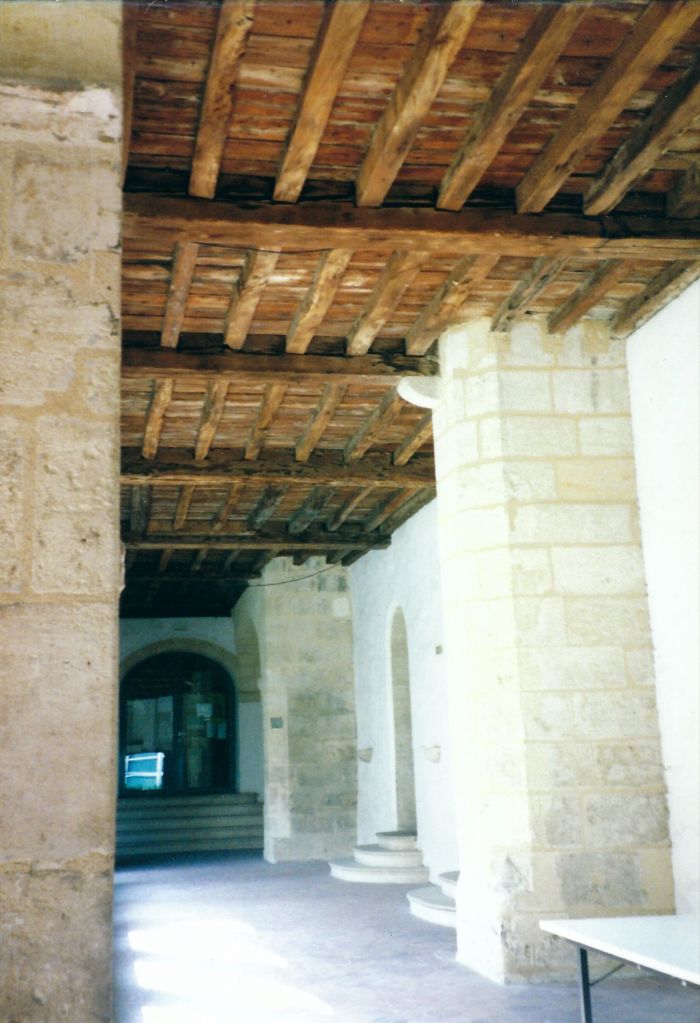
Credit: The Historical Vagabond
The four galleries of the cloister are unvaulted, with an upper floor above. The cloister reflects the balance and classical elements that are hallmarks of Renaissance styles coming out of Italy. However, the decorations of the cloister and the chapel still retain some gothic inspired elements.
In 1995, five sculptures by British artist Julian Opie were added to the cloister, representing buildings in the Bordeaux suburbs. In online photos they sort of look like HVAC units, up close I assumed they were tombs. I was pretty disappointed to find out they’re a modern public art installation, but apparently they were partly inspired by sarcophagi found at the Convent.
I hate using the term “hidden gem” because it has been so overused. In this case I will make an exception. Bordeaux’s Couvent des Annonciade is a true hidden gem, off the beaten path, small enough to be missed, and open only a few days per year.
Sources/For More Information
French Ministry of Culture: Dossier Le couvent de l’Annonciade
Official Website of the Sisters of L’Annonciade
Official website of the Soeurs Marie Joseph et Misericorde
Roest, Bert, Order and Disorder: The Poor Clares between Foundation and Reform (Medieval Franciscans, 8), Leiden, Brill, 2013.
Wright, Anthony D. The Divisions of French Catholicism, 1629-1645: ‘The Parting of the Ways’ Routledge Reprint, 2016.
 The Historical Vagabond
Hope I’ll make it there some day, be it on Heritage Day or for a more limited visit.
Not quite the topic: There’s one “with” too many in your post:
“The unique half-moon portal acts as a balcony above the chapel, with . “
Thanks for catching that!