
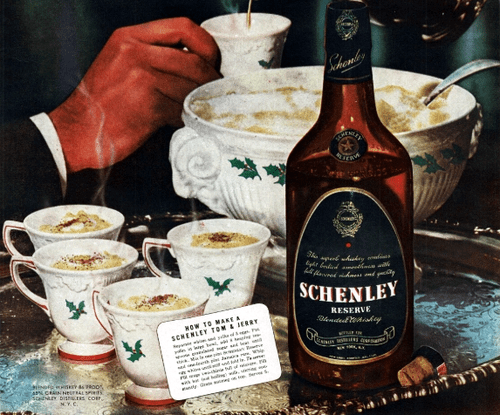
Last Christmas, I shared my interest in the various seafood traditions from around the world. This year I’m looking into my other Christmas joy: the fun holiday drinks. Nothing brings family and friends together to celebrate the holidays like a “cup of cheer”. I wanted to share some of the more obscure drinks,forgotten to time, but thanks to the insatiable thirst of social media, the world is a smaller place.
Colonial style nogs and flips, Puerto Rican coquito, traditional hot wassail and glühwein are all pretty well-known today. YouTube and TikTok are full of videos showing how to make these traditional Christmas drinks. However, the Historical Vagabond doesn’t travel the easy, well-trodden path. Instead, I found a few regional variants of these classic drinks, that should please the crowd.
Regional Eggnog Variants and Alternatives
Let’s start with some of the lesser-known “nog” variants. Classic American eggnog has roots in Old World custard drinks, but has crossed the pond to gain international popularity. Some of these drinks evolved from eggnog, others are part of the larger, spiced custard drink family. Some of these are more “noggy” than others, depending upon how much eggs and dairy is included, but any of these would be a great addition to a Christmas party.
Bombardino (Italy)
If you ever had the luxury of skiing in Italy, you probably have enjoyed a bombardino. This variant is usually made with equal parts egg liqueur or actual eggnog, and brandy, A bombardino is served warm and is popular throughout the Italian Alps during the winter, not just Christmastime.
Most recipes call for the use of Advocaat, which is the most well-known of the egg liqueurs. It is basically Dutch eggnog in a bottle and when mixed with sparkling lemonade, becomes a classic British Christmas drink: the snowball. However Advocaat is also very thick, like alcoholic pudding and might not be for everyone. For an authentic bombardino try to find a bottle of VOV or Zabov, these Italian egg liqueurs are creamier and not as thick.
Cola de Mono (Chile)
Cola de Mono is a fun drink with fun name, that’s been considered the world’s best cocktail by magazines that rank that stuff. Milk, coffee, sugar, Christmas spices like cinnamon, nutmeg and clove are simmered together. A healthy shot of Chilean aguardiente (pisco) or brandy is added before it is chilled. Some versions call for sweetened condensed milk for a thicker and sweeter monkey’s tail.
Chileans will debate how the drink got the name “the monkey’s tail,” there are three competing myths, none of them all that compelling. Many will agree however, it’s not Christmas Eve in Chile without Cola de Mono served alongside some Christmas fruitcake.
Kinutil (Philippines)
This alcoholic drink is sometimes known as Philippine eggnog but is more like an alcoholic hot chocolate mudslide. Kinutil is made from palm wine, egg yolks and home made ground chocolate called tablea. Many people add sweet condensed milk, brown sugar, even orange soda. It is heated and whisked with a special tool until frothy.
The drink comes from the Visayan Islands and Kunitil means “stirred” in the local language. The drink’s base of Asian palm wine and American cacao show vestiges of the old trade routes of the famed Manila Galleons. Blending two exotic ingredients from either side of the Pacific with other ingredients and traditions from Europe. It is not strictly a Christmas drink since it is made for all sorts of special occasions. Palm wine might be hard to find, but this would really make an impression at the party as you literally whip up a batch of Kinutil.
Poppy Seed Milk – Aguonų Pienas (Lithuania)
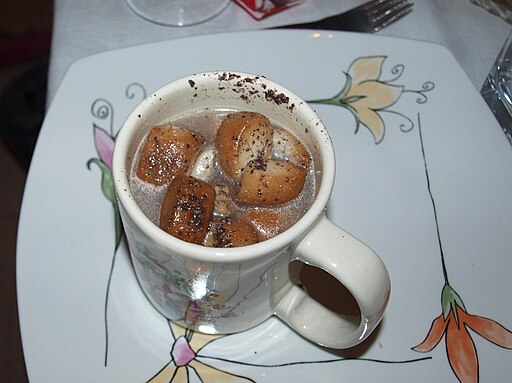
Credit: Mindaugas Danys, CC BY 2.0, via Wikimedia Commons
This really is in a category of its own, but Aguonų pienas has a “noggy” quality, even though it is dairy-free, egg-free and non-alcoholic. Black poppy seeds are soaked overnight and traditionally ground in a mortar and pestle. The ground seeds are strained to produce a milky liquid that is sweetened with honey. Food processors and smoothie machines have made the process much easier and modern recipes add various flavorings.
Lithuania was one of the last holdouts of European paganism, well into the Middle Ages, so this drink was not always associated with baby Jesus. Aguonų pienas was originally part of the mystical Winter Solstice celebrations. It’s possible the trace amounts of opiates in the poppy seeds ensured good sleep, and perhaps visions of the coming year. Poppy seed milk is still a popular tradition in Lithuania, drank as a dessert on Christmas Eve. Many enjoy eating it with crushed poppy seed cookies mixed in. Must be great way to get the kids to bed before Santa arrives.
Tom & Jerry (United States)
This variant of the classic eggnog, served warm, frothy and boozy is gaining in popularity. It is typically made using a thick batter, hot water or milk and Christmas spices like cinnamon and nutmeg. Most eggnogs have one type of alcohol (rum, brandy, bourbon), but a Tom & Jerry adds a second, historically brandy, to add an extra kick to the jingle bells. Now I’m starting to think that my grandma’s famously-rummy eggnog, served warm with a pile of whipped cream, was actually a version of a Tom & Jerry.
The name of this drink and everything Tom & Jerry that came after it, (including the cartoon) was originally from an 1820 novel and play, by boxing journalist Pierce Egan. To promote the book he created a new eggnog recipe called the Tom & Jerry, after the main characters. It was just a stronger version of the popular eggnog of the era. Over time, it began to be served in large punch bowls like regular eggnog. Tom & Jerrys were once so popular at Christmastime that special punch bowl sets were sold with cute little serving mugs. Today these classic sets, as well as pre-made Tom & Jerry batter can be easily found online.
Mulled and Spiced Drinks
Seems like everyone has some version of hot, spiced, usually alcoholic drinks for Christmas. Some use wine, some use apple cider, and some use other juices or infusions as a base. What they all share is the addition of spices and dried fruits that we all identify with Christmas and served hot. Orange peel, nutmeg, cloves, cinnamon and star anise taste and smell like the Holidays wherever you are.
Cidre Chaud (France)
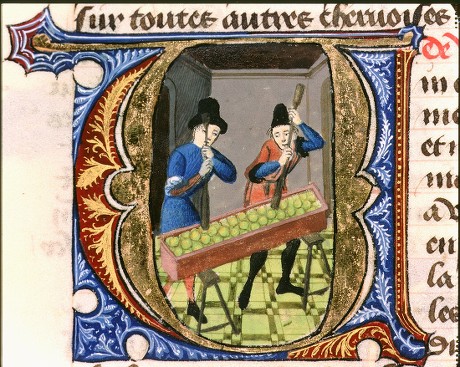
Aldebrand of Florence (1356)
Hot mulled apple cider and wassail is not just a British tradition, the apple growing regions of Northern France have their own version called cidre chaud. Normandy has been producing cider since at least the 11th century. It is much less popular than mulled wine (vin chaud) outside of Normandy/Brittany, but is gaining popularity. Cidre chaud made with a flavorful cider of Northern France, cinnamon, clove and orange peel sounds like a real crowd pleaser. Get the party started Normandy fashion by adding a dash or two of calvados before serving.
Using a non-alcoholic sparkling cider or a fresh cider from an orchard makes for a good booze-free option. However it’s the use of regional cidre that separates it from a typical mulled apple cider.If you want an alcohol free cidre chaud that is not cloudy, use a high quality organic apple juice instead of what we Americans know as apple cider.
Cranberry Kissel (Baltic States)
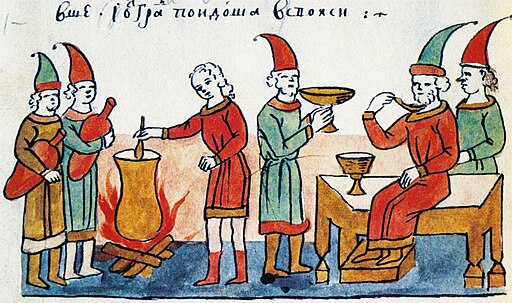
Radzivill Chronicle 15th century
Kissel is a tradition of Slavic regions that can be either a fruity drink or a dessert, depending on preparation. Cranberries, sugar and Christmas spices are boiled and mashed into a thick pulp. This is strained and then thickened to your liking with potato starch. A thin kissel can be a delicious non-alcoholic digestif at the end of the feast. Meanwhile, a thick kissel can be a vegan alternative for a gelatin fruit dessert.
Here is a slightly silly video showing you the Lithuanian version of kissel using cranberries.
Kissel has a long history in Slavic culture, first documented in the 10th century. There are types of kissel that were used as everyday food using oats, hemp seeds, milk or old bread. Sweet kissel made from fruits like cranberries became more common with the introduction of cheap potato starch. In the 19th century spiced fruit kissel became associated with Christmas in Poland, Ukraine, Russia and the Baltic States. Cranberry kissel is especially associated today with Lithuania’s Christmas Eve celebrations.
Kuhano Vino (Croatia) and Vinski Čaj (Slovenia)
Croatians celebrate Advent with Christmas markets and their take on mulled wine called kuhano vino (cooked wine). Every family has its own recipe, some more involved than others. Unique to Christmas mulled wines, is the fact you can make this with either red or white wines. Some add dissolved sugar, some add orange juice, some go crazy with the spices and fruit – but it’s not kuhano vino without star anise.
Their cousins in Slovenia have a similar tradition that sometimes goes by the same name, but is also called Vinski Čaj. It is very similar but several recipes I’ve seen online have the fun addition of brewed tea. And while kuhano vino in Croatia is strictly wine based, Vinski Čaj often has an extra punch of brandy or vodka.
Sbiten (Russia/Ukraine/Belarus)
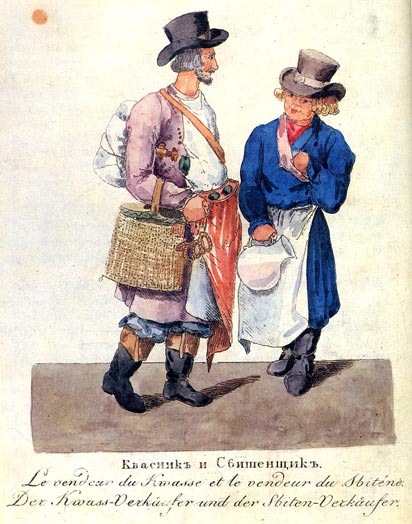
From the book: The Magic Lantern (1817)
Sbiten predates the arrival of tea in what would become the Russian Empire and came in both warm and chilled versions. Warm sbiten, with or without alcohol, was once a very popular winter drink but is had to find today . It is brewed from honey, water and various herbs like mint and the typical Christmas spices like clove and cinnamon.
This traditional mulled beverage was the hot drink of choice going back to the days of Kievan Rus’. The drinking of sbiten, along with the brewing process, were once ingrained in the fabric of Belorussian, Russian and Ukrainian culture. Coffee and especially tea quickly overtook sbiten in popularity by the 19th century and has become rare as a Christmas drink. It is arguably more popular outside of Russia, among the descendants of Slavic immigrants in North America.
Grzane Piwo (Poland)
At Christmas markets in Poland you can stave off the cold with a cup of traditional hot mulled beer called grzane piwo. This is a great alternative to mulled wine or cider, using almost all the same Christmas spices. If you find mulled wine too sweet, give grzane piwo a try.
Grzane piwo has a lot of customization options based on what kind of beer you use. Some use Polish lagers, but many prefer to use an imported Belgian ale for their dark, semi-sweet characteristics. Cloves, cinnamon, star anise, and ginger are mulled together with your beer of choice. Sweeteners like orange juice, or more traditionally, honey, can be use to get it they way your guests want it.
Traditional Christmas Beers and Carbonated Beverages
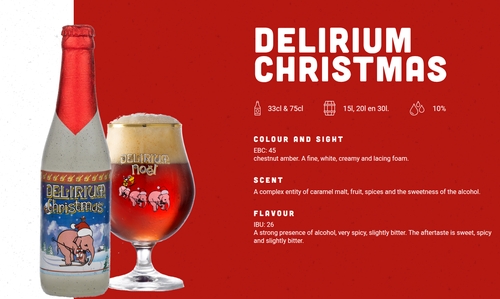
Belgium’s Delirium Noel is Christmas in a bottle
Credit: Delirium.be
Today, every American microbrewery puts out a “Christmas Ale” that tastes like a gingerbread house. The now-waning craft beer craze introduced America to styles of ale and lager that hearken back to the brews of old England. Malty brews flavored with cinnamon, nutmeg and clove were popular before hops took over. These types of beers, with their warming notes of spice, stayed popular for Christmastime even after modern styles took over.
These dark, spiced and sometimes sweet, beers crossed the Channel over to Belgium, where the style blended with the brewing traditions of the Trappist monks. Belgian Christmas beers in fancy painted bottles are almost a separate genre today, but the whole tradition is not very old. Belgians used to import Scotch ales from Britain until the first bière de Noël was created in 1903.
On the other side of the flavor spectrum is Belgium’s Stella Artois, a light pilsner created in 1926 to celebrate (profit from) the Christmas Star. This mass produced and mass marketed beer is so ubiquitous today that it’s hard to imagine back when it was special. Stella might be played out but there are plenty of mainstream brewers that also put out good traditional Christmas beers.
Juleøl/Julebyrg/Jouluolut (Scandinavia)
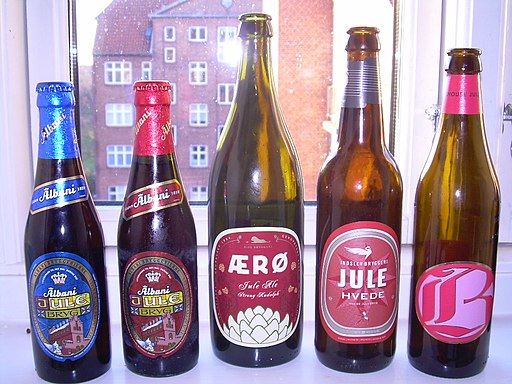
The Christmas beer tradition is much older in the Scandinavian countries. The Norse (Vikings) drank beer and mead during their celebration of Yule or Jul long before they heard of Christmas. When these people became Christian, the tradition of brewing beer for Jul continued for a different God. Originally, Christmas beers were made at home, but commercially produced versions began to take over in the mid 19th century when German style brewing arrived. The older Medieval style ales were replaced with beers resembling modern lagers and pilsners.
Denmark’s Tuborg brewery makes the popular Julebryg, which comes out every year on the first Friday in November, known as J-Day. Norway has a highly competitive market with hundreds of Juleøl brands ranging from festive pilsners to dark stouts. Swedes prefer light lagers and pilsners, but they like their julöl dark and malty. In Finland, Christmas beer is Jouluolut, a malty Vienna style lager with a little of the expected Christmas spices. Some families still make a non-alcoholic version at home.
Gemmerbier (South Africa)
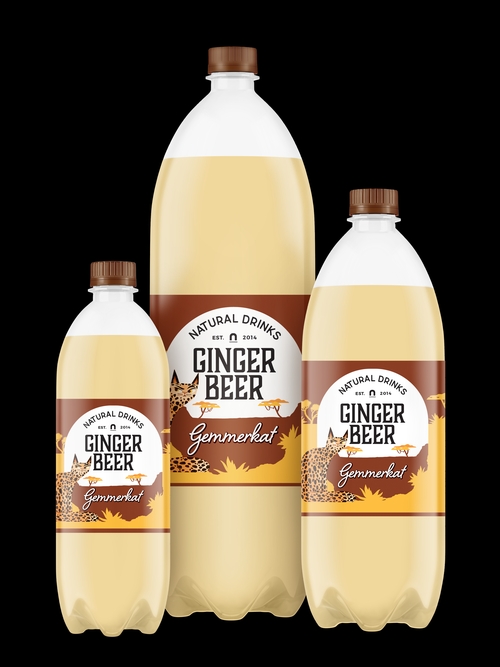
Courtesy: Natural Drinks South Africa
Many countries celebrate with champagne, but South Africa celebrates with gemmerbier. This is a homemade ginger beer brewed with ginger root or ginger powder, yeast and sugar as the primary ingredients. This produces a classic, ginger beer with a nice punch and less sweet than ginger ale. The natural fermentation gives it this extra flavor and can also turn it into alcoholic if left a little longer.
A South African Christmas can be hot, so it’s no surprise they enjoy drinks that can beat the heat of summer. However gemmerbier is served for more than just Christmas and New Year’s parties, it is expected at any South African celebration – from weddings to funerals. Everybody’s grandmother has the “best” traditional recipe and some found online include raisins, cloves or pineapple to make it even more festive. Although most people still make it at home, there is a popular brand called Gemmerkat (ginger cat) that makes special flavors in time for Christmas.
Tella (Ethiopia)
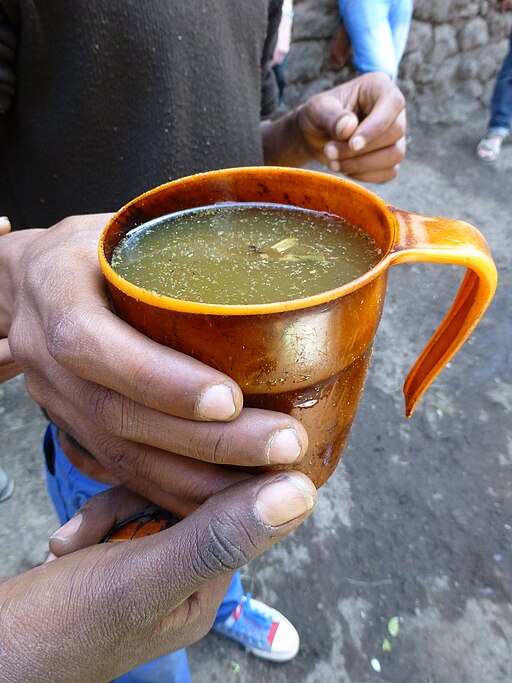
Credit: Ji-Elle, CC BY-SA 3.0 , via Wikimedia Commons
Ethiopia is one of the original nations to convert to Christianity and has been celebrating the birth of Jesus since the 4th century. The country’s unique Ethiopian brand of Orthodoxy evolved without much contact with the rest of the Christian world. The traditional foods and drinks of Ethiopian/Eritrean Christmas rely heavily on local ingredients. Especially when it comes to Tella (siwa in Tigray) a traditional beer served for festivals.
Tella is an Ethiopian homebrewed beer with an ancient heritage. The beer is made with local grains, usually barley but can also be made with alfalfa or teff – the iconic Ethiopian grain. No yeast is added, relying on wild yeasts in the environment to start the fermentation in a traditional clay pot. Wild buckthorn is added sort of like how hops are to Western beers. The end product is a low-alcohol beer that has been a staple at Christmas, weddings and various other Ethiopian festivals.
Christmas Punches of the World
Christmas punches, like all punches, have an ambiguous history, but arrive on the scene by the 17th century. Whether punch originates in India is debatable, but you don’t get anything much like a punch until the English started messing around there. It didn’t take long for the basic concept to adapt to local conditions, using whatever fruits, sweeteners and alcohols were available. Some traditional Christmas punches are wine based, others are spirit based, but it is the distinctive Christmas flavors of spice and citrus that set them apart. Origins aside, punches are a great way to spread the holiday fun to a gathering, and even traditional recipes are easily adaptable.
Feuerzangenbowle (Germany)
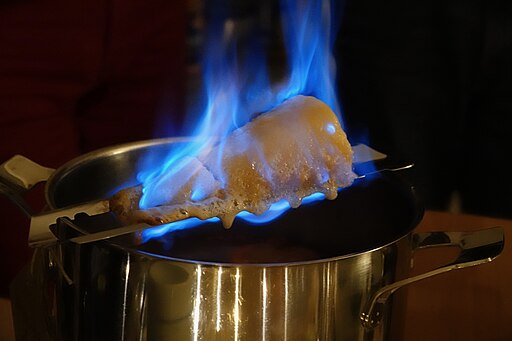
Credit: Amrei-Marie, CC BY-SA 4.0 , via Wikimedia Commons
When regular old German mulled wine (glühwein) has lost its panache, light it on fire! It certainly is a performance that will draw a crowd, and hopefully not the fire department. It starts with a simple mulled red wine usually with clove, cinnamon and orange peel. What sets it apart is how you sweeten the concoction. In Germany they sell a special sugarloaf that is put on a grate above the mulled wine. High proof rum is used to saturate the sugar before lighting. More rum is ladled on top creating quite a spectacle as it caramelizes the sugar. A mug of Feuerzangenbowle is hot, boozy, spicy and sweet. A little goes a long way, the sugar and alcohol going right to your head, so serve small cups.
This is one I actually have experience with. One Christmas, our friends from Berlin brought a sugarloaf cone for my parents old (and a little wild) annual party. We didn’t have the special German hardware so my dad, in true Gloucester fashion, fabricated a stainless steel seat for the sugar to rest above the mulled wine. As he ladled flaming Bacardi 151 over the sugar, the flames went so high that is melted the paint on the kitchen ceiling. A Christmas story literally burned into memory!
Sorrel Punch (Jamaica)
The people of Jamaica and several other Caribbean islands celebrate Christmas with a one of the most beautiful of all holiday beverages. A royal purple sorrel punch made from hibiscus flowers, ginger, orange peel, cinnamon and other Christmas spices. The ingredients steep, sometimes for days before adding red wine, and the all-important white overproof rum. Jamaican’s enjoy their sorrel with a piece of Christmas fruit cake
I don’t know about you, but this sounds so good and refreshing, with or without alcohol. Serve this at your Christmas party to introduce it to your friends, then break it out for the summer cookouts.
Sorrel punch originated from West Africa, where hibiscus (sorrel) is native and is the basis of many drinks. Zobo is a similar drink from Nigeria that combines sorrel and spices with various fruits like pineapple. Sorrel and its many uses were brought to the Caribbean in the 17th century during the slave trade. Sorrel’s connection to Christmas came about from the plant blooming in November and December. This traditional African ingredient began to be associated with Christmas festivities, with an important cultural link, in the form of a delicious beverage.
Ponche Navideño (Mexico)
Mexico’s Christmas punch of choice is loaded with fruits, most importantly tejocotes, also known as Mexican hawthorn. It was once illegal to import this fruit into the US, robbing Mexican-American families of the the distinctive aroma and syrup like quality the fruit imparts. However, there are jarred varieties and numerous other fruits like quince, that can take its place. Tamarind paste, guava, hibiscus, orange and cinnamon are stewed with a sugarloaf (or fresh sugarcane) and tejocotes to produce a warm, drinkable fruit potpourri.
Ponche Navideño has been around since the early 17th century, when the concept of “punch” arrived in Europe from India. The Spanish nobility brought it to Mexico, where it was adapted to use a mix of local fruits and imported ingredients. Over the centuries, the punch became a central part of Mexican Christmas parties known as posadas during the final days of Advent. Today, you can get all the main ingredients in a jar to get your ponche a head start.
Sujeonggwa (Korea)
The Korean peninsula does not have a very long tradition with Christmas, but they still have a delicious non-alcoholic punch perfect for the season. Sujeonggwa is a blend of cinnamon, ginger and sugar, garnished with dried persimmon and pine nuts. The sweet, spicy and fragrant punch is the aroma of the holidays when served warm, but can be a refreshing iced sweet tea all year round.
Sujeonggwa predates Christianity arriving in Korea by nearly 150 years, so it’s Christmas flavors are just a coincidence. Originally it was drank exclusively by the nobility during banquets. Ginger, cinnamon and especially sugar, were expensive imported ingredients, making Sujeonggwa a rare luxury. Christian missionaries introduced Christianity and the celebration of Christmas in the late 19th century. By then, Sujeonggwa was starting to become more available, and since then integrated into Lunar New Year’s celebrations. For Koreans, this drink is not about Christmas, it’s about nostalgia in a cup. It is the aroma and flavors of fond memories with friends and family more than any particular holiday.
Conclusion
Some of these drinks may be well-known favorites in your household, but will be a whole new experience for those of us who buy eggnog in a carton. There is a whole world full of delicious Christmas drinks out there to explore. If you have a favorite, share it with us in the comments!
Thanks to Andre of Natural Drinks South Africa for images and information on gemmerbier and to Simon from Brouwerij Huyghe for the image of Delirium Christmas Ale.
Sources/More Information
A Short History of Belgian Christmas Beers
Atlas Obscura: How to make ponche navideno
Food Feature: Heritage Continued Gemmer Ginger beer
Juleøl: Norwegian Christmas Beer
Poppy Seed Milk: Recipe from Taste of Lithuania
Russian Museum of Ethnography: Kissel (trans.)
 The Historical Vagabond
What a fantastic variety of drinks! This was a very interesting post, thank you!
Thanks for visiting!