
Have you ever accidentally stumbled upon a legendary restaurant, only to learn about it after the fact? Happens to me every time I’m in Europe apparently. In the early 2000’s it was an accidental visit to the oldest restaurant in France and in the winter of 2009, I stepped into Nam Kee, one of the best, and best known Chinese restaurants in Amsterdam. Food was pretty good too.
Credit: The Historical Vagabond
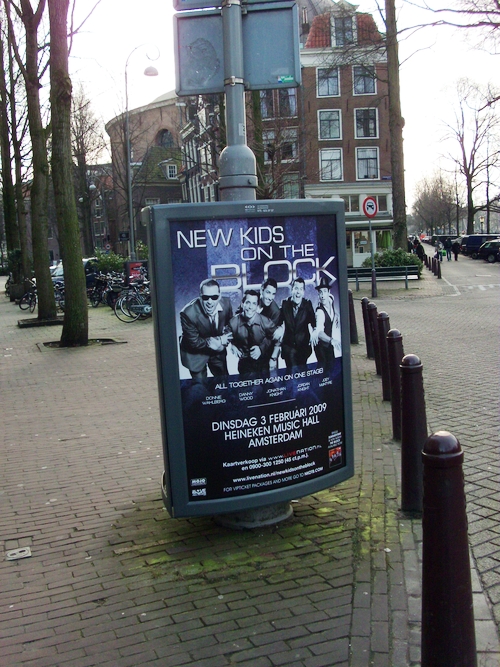
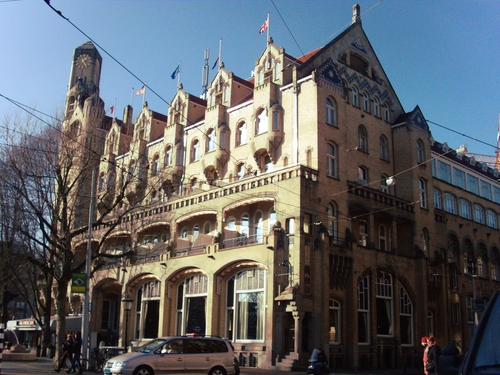
It was the winter of 2009, the two of us decided on an off-season visit to Amsterdam, heavily influenced by my wife’s rabid loyalty to New Kids on the Block. They were officially back together and playing at Amsterdam’s Heineken Ballroom.
Credit: The Historical Vagabond
This is back when we actually has some spending money and so she got one of the expensive packages to meet them before the show. She also got to meet up with NKOTB fans she met online and we all had a fun time drinking at the Bar Americain on the Leidsplein – with some of us husbands in tow.
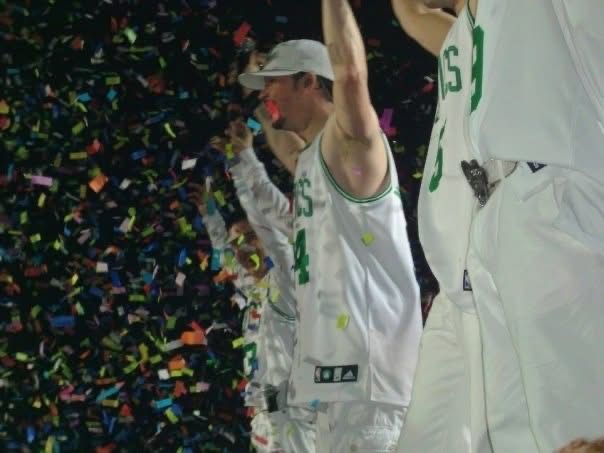
Heineken Ballroom, Amsterdam 2009.
Credit: The Historical Vagabond’s Wife
The night of the concert she took the metro to the venue and I went to a favorite coffee shop to start my night. I had a night to myself in my favorite city, and I intended to eat something amazing.
Zeedijk’s “International Food Court”
It was a cold wet night and I found myself walking along the Zeedijk. I had already planned to check out the restaurants in this part of the historic center because of the crazy array of ethnic food. This is a very old part of town, and has one of only two surviving wooden building in historic downtown Amsterdam. At one time this is where the early merchants had their homes and warehouses. When merchants moved to the newer canals, this old part of town, close to the dock and the Ij River, became home to sailors, longshoremen and their associated vices. It is not as rough as it used to be but still free-spirited, with some of Amsterdam’s most popular gay bars located in the lower end of Zeedijk.
The historic buildings are home to many bars, cafes and food ranging from Argentinian steakhouses to Vietnamese pho. Amsterdam doesn’t get the love as a foodie city as other European capitals, but I feel it should. There are several areas within the walkable historic center that are basically outdoor food courts. One is the gauntlet of restaurants along Korte Leidsedwarsstraat at the Leidseplein, and here along the Zeedijk, following the former path of the old city “sea dike” through Chinatown and up to the former city gate and weigh-house, today known as de Waag.
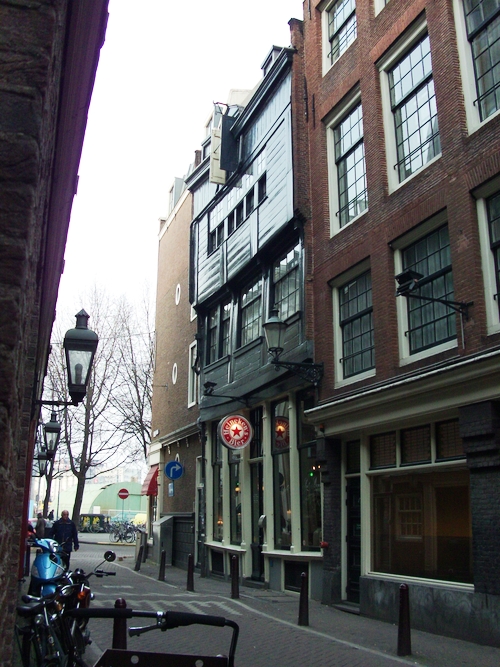
It houses the famous sailor’s bar In’t Aepjen.
Credit: The Historical Vagabond
I’ve walked this street plenty of times, but this time I treated it like my own personal food court. Strolling in the cold rain from the famous Brown Cafe In ‘t Aepjen to Amsterdam’s Chinatown, exploring menus and grabbing a few beers along the way. That is when the aroma of roasting meats from a small Chinese place caught my attention. Even though we ate Chinese earlier in the trip at the impressive Oriental City, I began to feel myself wander in, carried by the aroma like an old Warner Bros. cartoon.
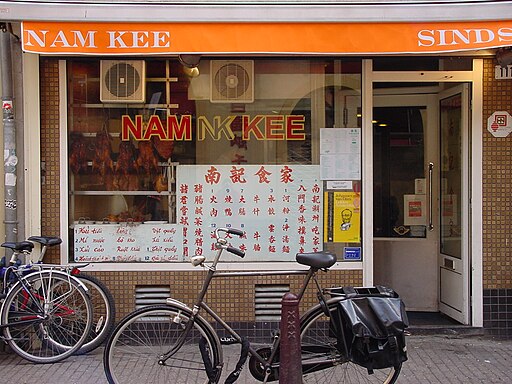
Nam Kee in Amsterdam’s Chinatown
Credit: Esther Westerveld, CC BY 2.0 via Wikimedia Commons
Nam Kee was founded in 1981 by Nam Chan on the Zeedijk. It started off more like a Chinese-style ”diner” than a full restaurant. There were only 16 seats and it was originally frequented by local Chinese clientele. Nam Chan prepared the food which was only traditional Cantonese. Much like American-Chinese food, most restaurants adapt recipes to cater to the larger population and many Chinese, Indian, Indonesian and Thai restaurants in the Netherlands adapt to Dutch tastes (Hollandse smaak).
Nam Kee continued to grow in reputation outside Chinatown. The seating area was expanded and the main kitchen moved upstairs once the rest of Amsterdam and the tourists discovered this “hidden gem”. In 1992, the second restaurant was opened on the Nieuwmarkt and in 2010 Nam Kee expanded out of the city center with their largest location Nam Kee Heinekenplein in De Pijp neighborhood. However this location has since closed.
Over the years, Nam Kee has won numerous awards and glowing reviews and generally considered by locals, tourists and ex-pats. Most importantly to me, is that is is beloved by the local Chinese population and one of the reasons I chose this place over the many other options nearby.
In 2024 Nam Kee was taken over by new ownership. Wei Ming Kan, the new owner has kept everything the same, with the exception of streamlining the menu. Recent photos show that the dining area has seen a makeover from the old white subway tiles, but is still a cozy little place with top-notch Cantonese. Dutch food reviewers declare the new Nam Kee is just as good as it always has been.
My Visit to Nam Kee
Credit: The Historical Vagabond
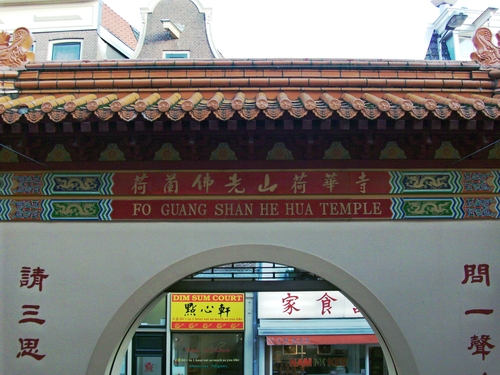
My Nam Kee experience was at the original in Chinatown, across the street from the Fo Guang Shan He Hua Temple. The small storefront sits unassumingly along the row of similar Asian restaurants. A small kitchen area is right in the front window, with roast ducks hanging to lure you in. A Chinatown just isn’t a Chinatown without places like this, I could have just as easily been in Boston, New York or San Francisco.
The place was starting to fill up around 6-6:30PM and the small tables were occupied, so I sat at one of the larger shared tables. I was soon joined by an older Dutch couple and although we kept to ourselves at first, we eventually got to talking. They told me this little place is actually very famous in the Netherlands and I would not be disappointed.
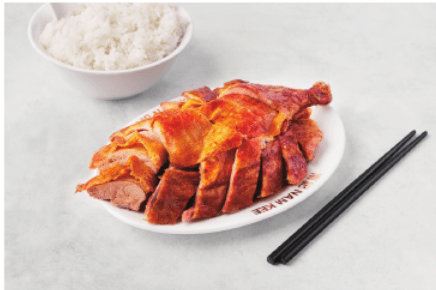
I got their Peking Duck rice dish and a Tsing Tao beer. A few bites later and I was on a transcendent journey to Chinese food heaven. My new friends were right, it had to be the best Peking Duck I’ve ever had. Served over the rice, which had absorbed all that fatty duck goodness, left me completely stuffed.
My dining neighbors were finishing up their noodles and suggested next time I should try their most famous dish: steamed oysters in black bean sauce with scallions and dash of hot chili oil. A delicious and popular appetizer that has inspired a novel, a movie and eventually a cookbook, since 2001.
New Fame from Oesters van Nam Kee
In 2001 Dutch author Kees van Beijnum published De Oesters van Nam Kee. It’s a story of unrequited love that partly takes place at Nam Kee, where the characters Thera and Berry have the now famous oysters for dinner. The book won that year’s Ferdinand Bordewijk Prize for best Dutch prose.
A Dutch drama titled Oesters van Nam Kee starring Dutch actors Katja Schuurman and Egbert Jan Weeber came out in 2002. Directed by Pollo de Pimentel, scenes were shot on location at the original Nam Kee location in December 2001. The film was popular in the Netherlands, winning a Golden Film award for selling over 75,000 tickets.
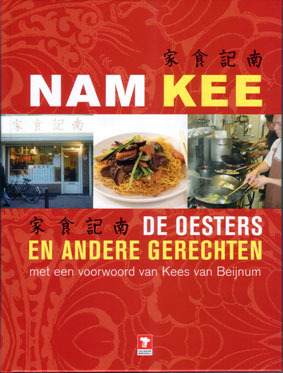
In November 2004 a popular but hard to find cookbook De Oesters En Andere Gerechten was published about Nam Kee’s kitchens secrets. It gives pointers on how to cook authentic Chinese, where in Amsterdam to find the ingredients, and tells the story of the City’s Chinese population. They were selling copies during my dining experience but there was no English translation, so it didn’t end up a souvenir.
I hope to get back to Amsterdam someday, and when I do, I have a growing list of restaurants I want to try or revisit. A return to Nam Kee was always on that list, it was too good for one visit. However now I know the story, and more about the menu, I’m going to start with the oysters.
Sources/More Information
Oesters van Nam Kee (2002) at Box Office Mojo
van de Meeberg, Hans. Bij Nam Kee lijkt de tijd stil te hebben gestaan. deBuik Amsterdam, July 2024
 The Historical Vagabond