
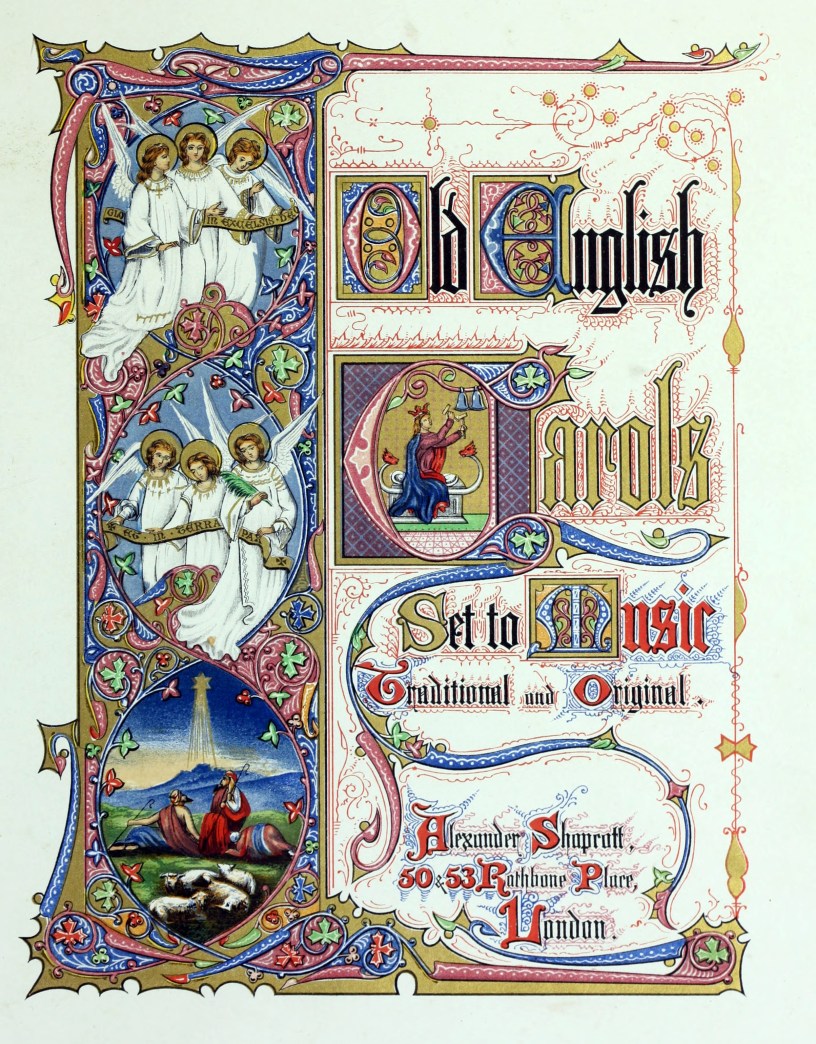
My wife likes to make fun of me because my favorite Christmas carol is Good King Wenceslas, one of the oldest and definitely oldest sounding carol still heard during a modern Christmas. I like that one because it has that Medieval-ish sound to it and makes me think of Christmas in those times, when the Twelve Days of Christmas were an important part of the European calendar. The history surrounding holiday foods, the drinks, and the music interest me even more as Christmas evolves further into a secular holiday for some of us.
Christmas lore and traditions is a very deep rabbit hole, that I will probably explore many times on this Site. When I decided to look into some of the old, obscure Christmas carols, it led me so far down, that I could be researching this piece until Easter. For the sake of all of us, this look at some forgotten, or nearly forgotten Christmas carols is just the tip of that iceberg.
These Christmas carols probably won’t be found on your favorite holiday album, nor will you be singing these ’round the fire. Then again, maybe you will, I think I found a few historic chestnuts that are worth learning about, and listening to.
Jesus Refulsit Omnium – The First Christmas Carol
This list will focus on English language songs, but I found this fun fact while researching. The original Christmas songs were more like hymns than what we would call carols today. That is evident here with what is considered the original “carol” from 4th century France: Jesus Refulsit Omnium by St. Hilary of Poitier. In English it translates to Jesus, Light of All Nations and it sounds like something from the earliest days of Christian Rome. Below you can listen to a modern rendition, with music (it was most likely performed a capella originally) from the Choir of Magdalen College at Oxford.
Lordings Listen to Our Lay – 13th Century
This Anglo-Norman carol was translated into modern English in the mid-19th century. According to one book of “ancient” Christmas carols, it may be the oldest carol created in England. I find it interesting because this Norman French carol ends with the Germanic wassail showing a mixing of the Norman and Anglo-Saxon traditions. 19th century sources state this is an example of song that were sung by itinerant minstrels that would entertain the Norman nobility.
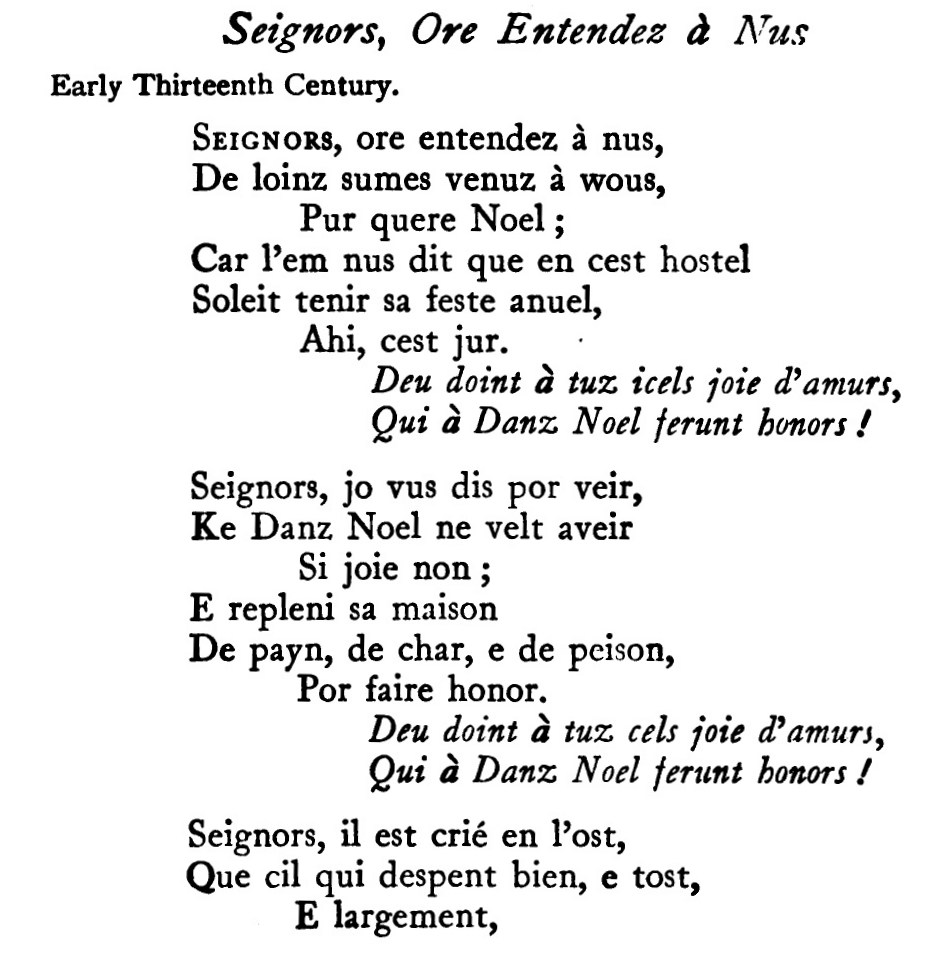
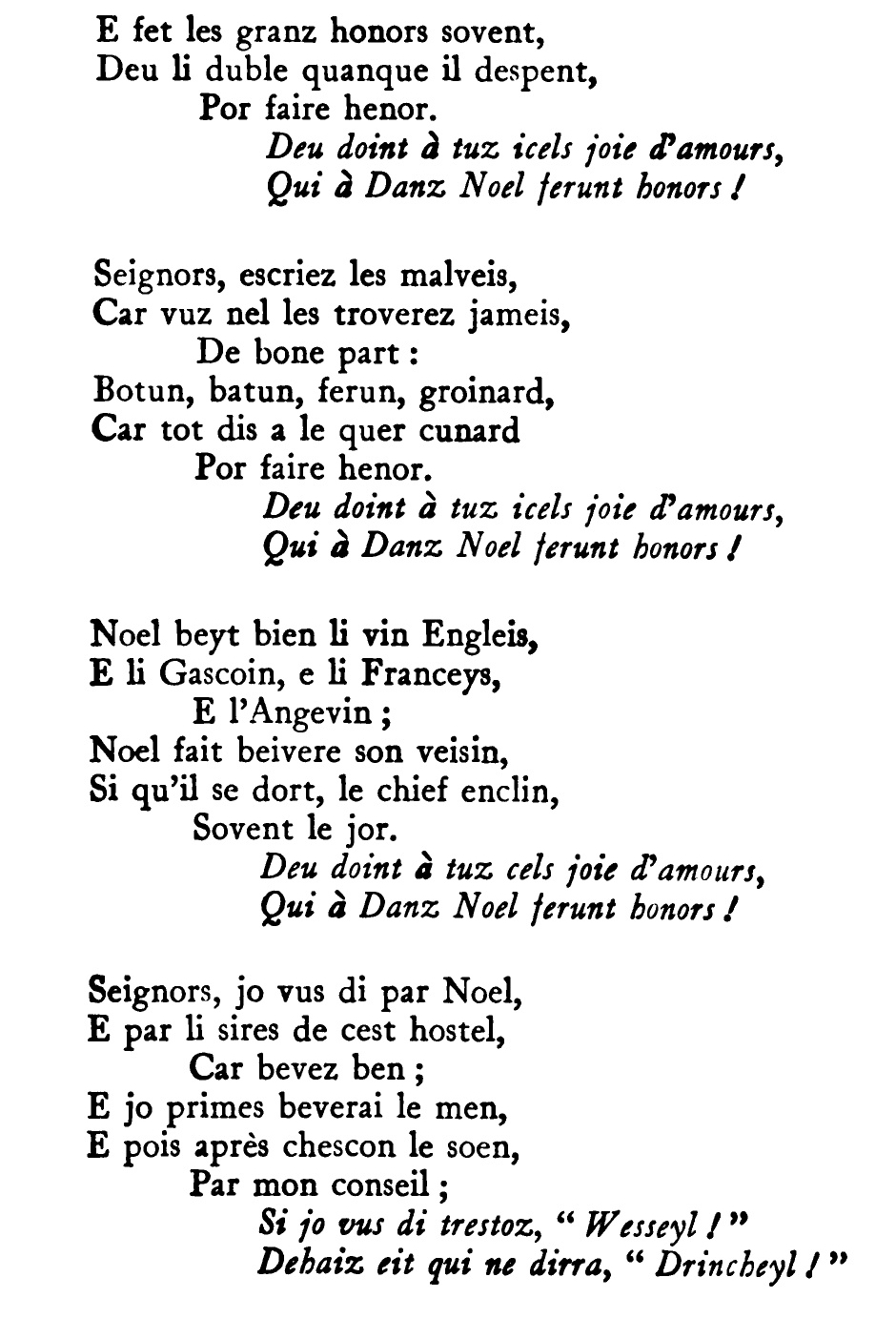
From: Ancient English Christmas Carols, 1400-1700
I’m not sure if the music is accurate in the English version above, but it sounds right. It makes me want to have some hot wassail with my friends by a roaring bonfire as we tell the sagas of our past adventures.
The Boar’s Head Carol – 14th Century
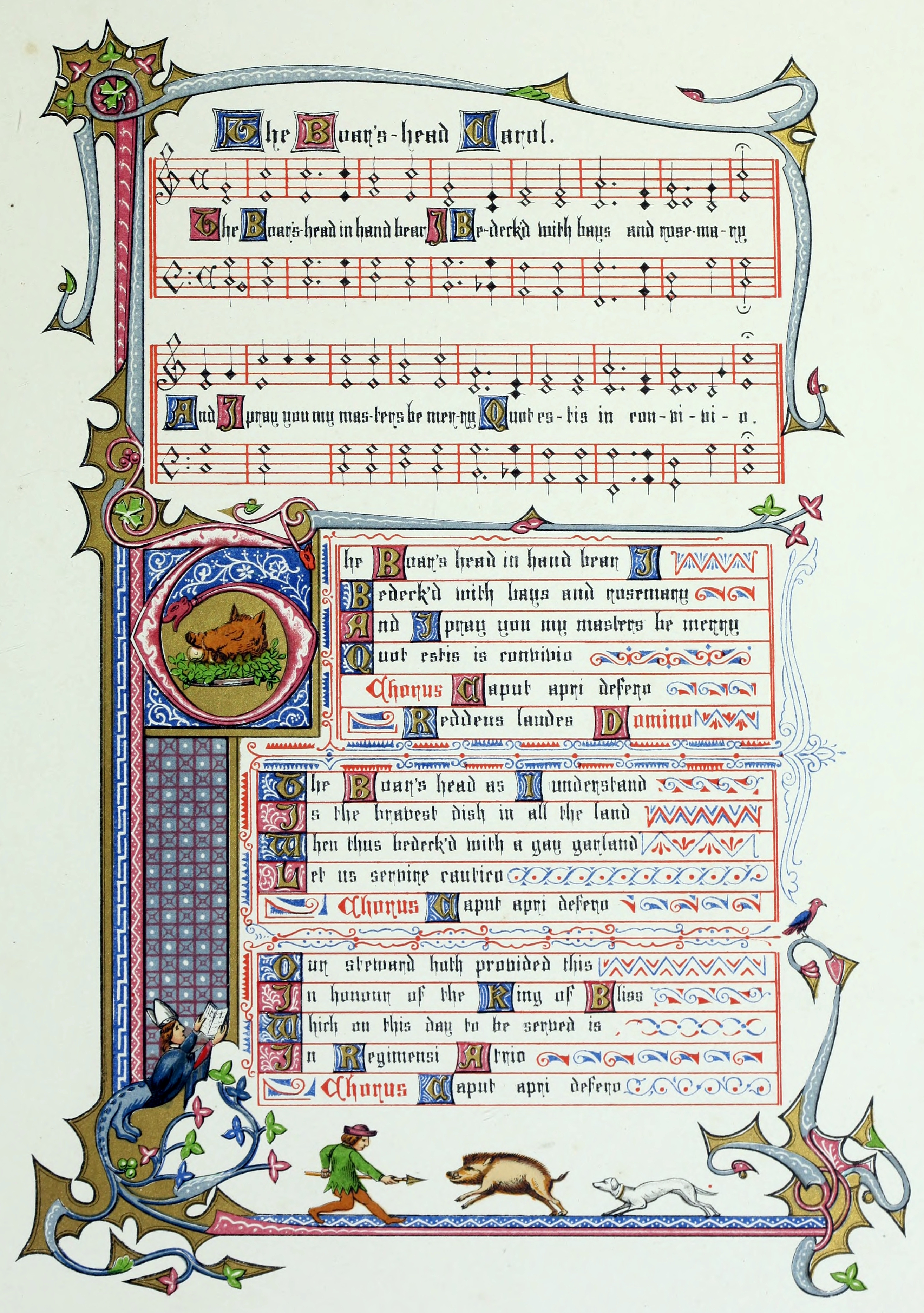
From: Old English Carols: Set to Music Traditional And Original
This one is not completely forgotten, but it is certainly archaic, with roots possibly going back to Anglo-Saxon times. Originally a pagan ritual, the boar’s head and the elaborate presentation would later be associated with Saint Stephen, whose feast is December 26th. The lyrics below are the original and differ a little from the modernized versions performed on this video:
(Original Version)
The bore's hedde in hande bring I,
With garlands gay, and rosemary
I praye you all synge merrily.
     Qui estis in convivio.

Chorus:
Caput apri defero
Reddens laudes Domino

The bore's hedde, I understande,
Is the chefe servyce of this lande,
Loke where ever it be fande.
     Servite cum cantico.

Chorus:
Caput apri defero
Reddens laudes Domino

Be gladde, lordes, bothe more and lasse,
For this hath ordeyned our stewarde,
To chere you all this Christmasse,
The bore's hedde with mustarde.
When Christ Was Born of Mary Free – 15th Century
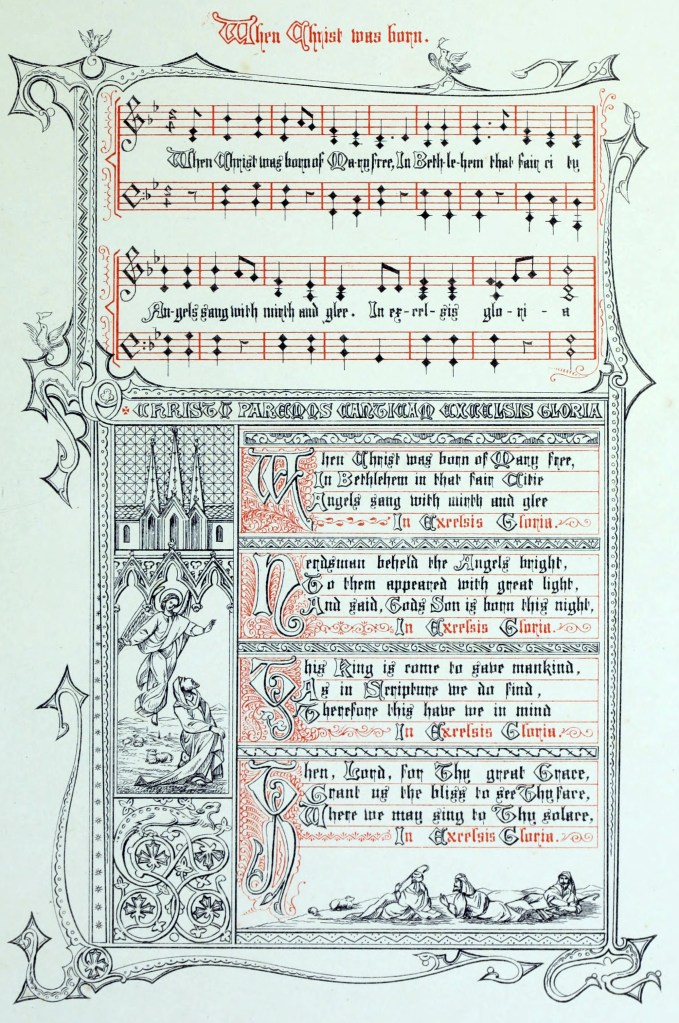
From: Old English Carols: Set to Music Traditional And Original
This carol is sung by many church choirs, but is still fairly obscure and old, either late 15th or early 16th century. This is an example of a macaronic carol that uses both Latin and English, similar to the Boar’s Head Carol. The curious term “Mary free” is from Old English, with “free” meaning “fair”.
 Christo paremus canticum, in Excelsis Gloria,

When Christ was born of Mary free,
In Bethlehem, in that fair citie,
Angels sang with mirth and glee,
     In Excelsis Gloria!

Herdsmen beheld the Angels bright,
To them appeared with great light,
And said " God's Son is born this night,"
     In Excelsis Gloria!

This King is come to save mankind,
As in Scripture we do find,
Therefore, this song have we in mind,
     In Excelsis Gloria!

Then, Lord, for Thy great Grace,
Grant us the Bliss to see Thy face,
Where we may sing to Thy solace,
     In Excelsis Gloria!
Here is a version with music by Daniel Burton that gives me a real Lord of the Rings Christmas vibe.
HARK! All Around the Welkin Rings
This is an oldie, but a goodie in my opinion. The use of the archaic welkin, a Saxon word for “sky” or “heaven”, may allude to the age of this carol. However, the use of welkin rings shows up in poetry into the early 18th century. This Christmas carol is not to be confused with the well-known carol Hark! The Herald Angels Sing. The original version of that carol started out as Hark How All The Welkin Rings by Charles Wesley in 1739.
HARK! all around the welkin rings,
Bright Seraphs hail the morn,
That ushers in the King of Kings,
That saw a Savior born.

Chorus:
Ye people on earth, your voices now raise,
To Christ our Redeemer, in carols of praise,
Hallelujah! praise the Lord, hallelujah!

Then shining heralds from on high,
These joyful tidings bear.
With acclamation down the sky,
And humble shepherds hear.

Chorus:
Ye people on earth, your voices now raise,
To Christ our Redeemer, in carols of praise,
Hallelujah! praise the Lord, hallelujah!

Glory to God, and peace to men,"
The heavenly choir did sing.
Let earth repeat the sound again,
And hail the new-born King.

Chorus:
Ye people on earth, your voices now raise,
To Christ our Redeemer, in carols of praise,
Hallelujah! praise the Lord, hallelujah!

This is the day our Lord did choose,
To visit mortal man.
And from the bands of sin to loose,
All those that trust in him.

Chorus:
Ye people on earth, your voices now raise,
To Christ our Redeemer, in carols of praise,
Hallelujah! praise the Lord, hallelujah!

Lord Jesus, let thy kingdom spread,
Through all the earth below.
Let every land thy wonders read,
And thy salvation know.

Chorus:
Ye people on earth, your voices now raise,
To Christ our Redeemer, in carols of praise,
Hallelujah! praise the Lord, hallelujah!

Hosanna! let all the earth and heaven,
Salute the happy morn.
To-day the promis'd child is given,
And God himself is born.
I found a video on YouTube of a version of the carol and I really like it. It’s hard to determine if this Christmas carol is really old, or just written and sung in a manner that makes it seem older. Either way hear it for yourself and let me know what you think.
Merry Christmas to all of you and a Happy New Year!
Sources/More Information
Rickert, Edith. Ancient English Christmas Carols, 1400-1700. New and cheaper ed. New York: Duffield, 1915.
Shapcott, Alexander. Old English Carols: Set to Music Traditional And Original. London: Alexander Shapcott, 50 & 53 Rathbone Place, 1875.
Sylvester, Joshua. A Garland of Christmas Carols: Ancient And Modern. Including Some Never Before Given In Any Collection. London: J.C. Hotten, 1861.
Sandys, William, Benson Collection of Hymnals and Hymnology (Princeton Theological Seminary). Christmastide: Its History, Festivities, And Carols. London: John Russell Smith, 1884.
 The Historical Vagabond
I happen to love Good King Wenceslas too, but I think it’s because it was one of my mom’s favourites so we sang it every year. The rest of your list, I’ve never heard of, and may not add to my playlist 😊 Maggie
I can’t wait to see the looks on everyone’s faces when I break these out on Christmas eve lol!
🤣🤣