
Christmastime means seafood for many of us, especially for Christmas Eve. If you are like me, it is more about delicious traditions than faith these days, but it is still a special time to be with the ones you love. I grew up with the Sicilian-American tradition of various seafood dishes served on Christmas Eve, popularly known today as the “Feast of the Seven Fishes.” Honestly we never called it that, we never called it anything except Christmas Eve dinner until the Food Network told us what we were doing.
It was fun, but not really a big deal since everyone we knew were fishermen living in a fishing town. There were always Christmas parties held by wharf owners loaded with the good stuff like imported crab from Alaska and piles local lobster. At home or at Grandma’s, haddock, octopus salad, winter shrimp, fried whiting were pretty common but sometimes there would be lobster pie, stuffed clams, stuffed squid and more that I can’t remember. We carry this tradition on today at our house, but just on a smaller scale.
Some of these dishes may have been traditional, but my family was more about using what was available than adhering to the past. However the practice of eating seafood for Christmas Eve, regardless of species or preparation remains strong and some very old traditions carry on today. Most of us live in a more secular society today, but these food traditions keep us connected to our past.
The continuation of these traditional preparations shed light on the conditions people from these respective cultures experienced during the Christmas holiday. It also shows the lingering shadow of the once overarching Catholic liturgical calendar that dictated medieval European life.
Fasting Before Christmas
The month before Christmas Day was reserved for fasting under various regional names. Different saints and the length of the fasts also varied depending upon Catholic or the different Orthodox traditions and calendars. In modern society, many people still practice the 40 days of Lent leading to Easter. However in the past, there were over 200 fasting days that had to be followed. The Christmas, or Nativity fast was one of the most important, which would be officially broken on Christmas Day. This was followed by Christmastide – the 12 Days of Christmas and its well-known celebrations.
The concept of fasting before Christmas was to prepare the body just as prayers and repentance prepared the soul for the symbolic birth of Christ. Depriving yourself of base desires and wants to cleanse the soul. Naturally, nutritious foods like meat, eggs and milk would be near the top of the list for a population mostly focused on farming and animal husbandry.
November was the start of medieval winter, and typically when when animals would be slaughtered and processed. It was no coincidence that the Nativity fast aligned with the end of the agricultural year. By having your workforce abstain from eating most animal products during this critical time, it will ensure there will be more food available to celebrate the birth of Jesus. Hopefully supplies would carry over into the leanest times of winter before the start of Lent.
Why Fish Instead of Meat?
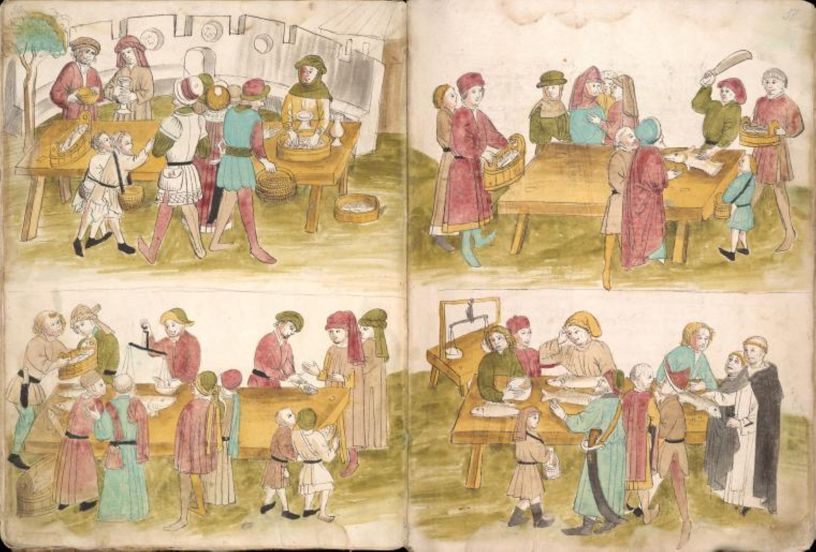
Historical Museum Bamberg, Public domain, via Wikimedia Commons
Most meat from land animals was prohibited during fast days, fish and seafood however, was permitted due to medieval concepts of health. Fish and other sea creatures were considered inferior to land animals in terms of nutrition…and status. Living in the cold, wet, sea meant that fish were inherently inferior to land animals according God’s hierarchy. To live mostly off seafood, even when not fasting was considered low status, especially in an age when it was forbidden to rise above your station.
This belief among Europeans, including the English, carried over after the Protestant Reformation in the 16th century, and brought to the New World by the first colonists. Within a few years of settlement, the English in Massachusetts Bay began to look down upon those who were subsisting mainly on the abundant clams and lobster.
Seafood was considered less nourishing, allowing the faithful to survive, but not necessarily thrive, during a fast. Abstaining from meat and eating fish on fast days, you were depriving yourself in a form of penance known as “mortification of the flesh.” Every Christian was expected to adhere to these dietary rules, with the exception of the sick or very old.
Of course, today we know this isn’t true and that seafood is one of the best food choices you can make. The faithful may have thought they were starving themselves for Christ, but in reality may have been giving themselves a needed boost in protein and vitamins as the days got shorter and colder.
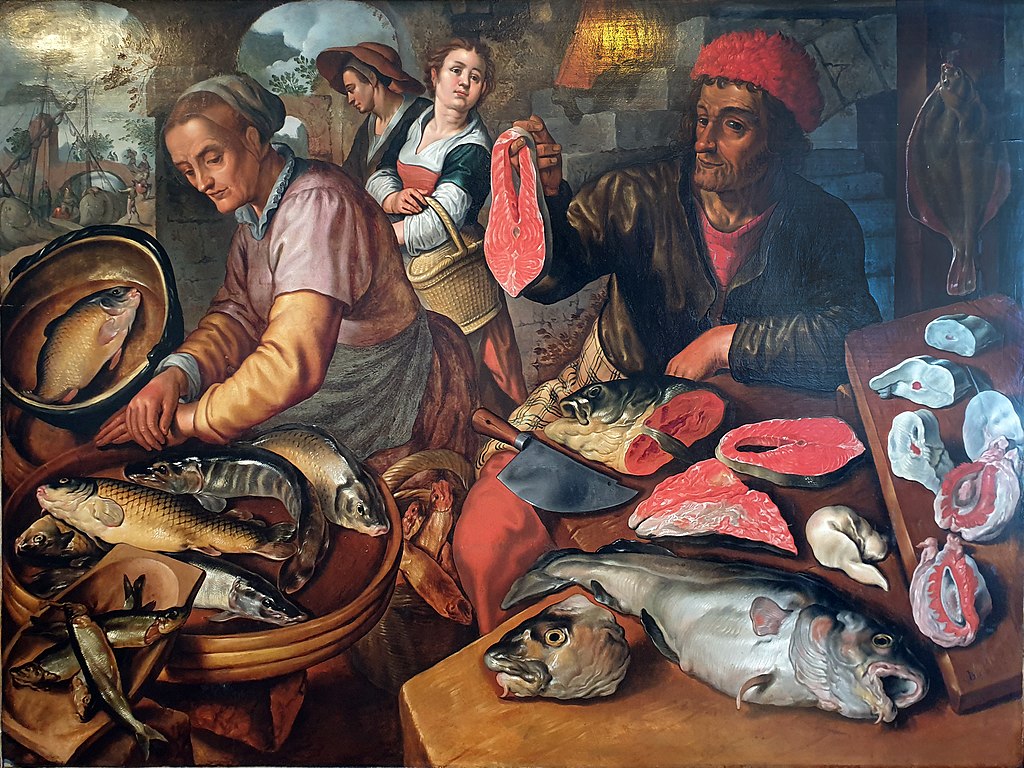
To adhere to these strict rules by the Church, Europeans scoured the seas, rivers and lakes to source acceptable foods for the Christmas fast. From these resources arise some of the most treasured foods of the holiday season, along with some of the most obscure. Depending upon your background, or where you live, some of these traditional Christmas foods may be old favorites. Some may sound good enough to try out for yourself, and some you might find disgusting, but that’s all part of the fun.
If you have a Christmas seafood tradition or experience you would like to share, please add it to the comments!
Cod for Christmas
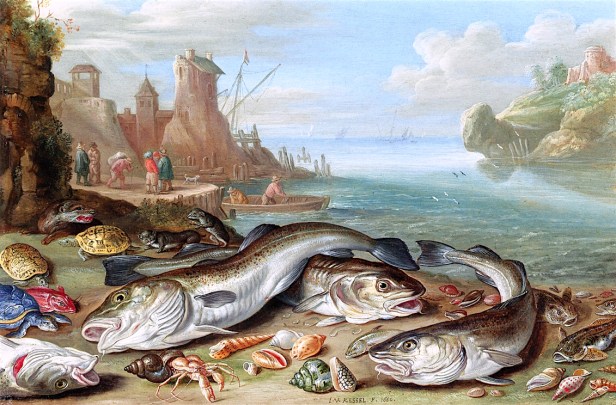
By Jan van Kessel the Elder – 1660
It’s difficult to understate the importance of cod in the medieval and early modern European diet. Cod had everything going for it: Large, abundant, easy to catch, good to eat and could be easily preserved. Cod was so vital to feeding Europe that explorers were sent to the New World to find where the Basques were catching it all. Most cod was not consumed fresh before the growth of the ice industry, instead it was preserved using two primary methods: salting or air drying/fermenting. These techniques produce cod products that you can still find today and still grace Christmas Eve dinner tables.
Baccalà-Bacalhau
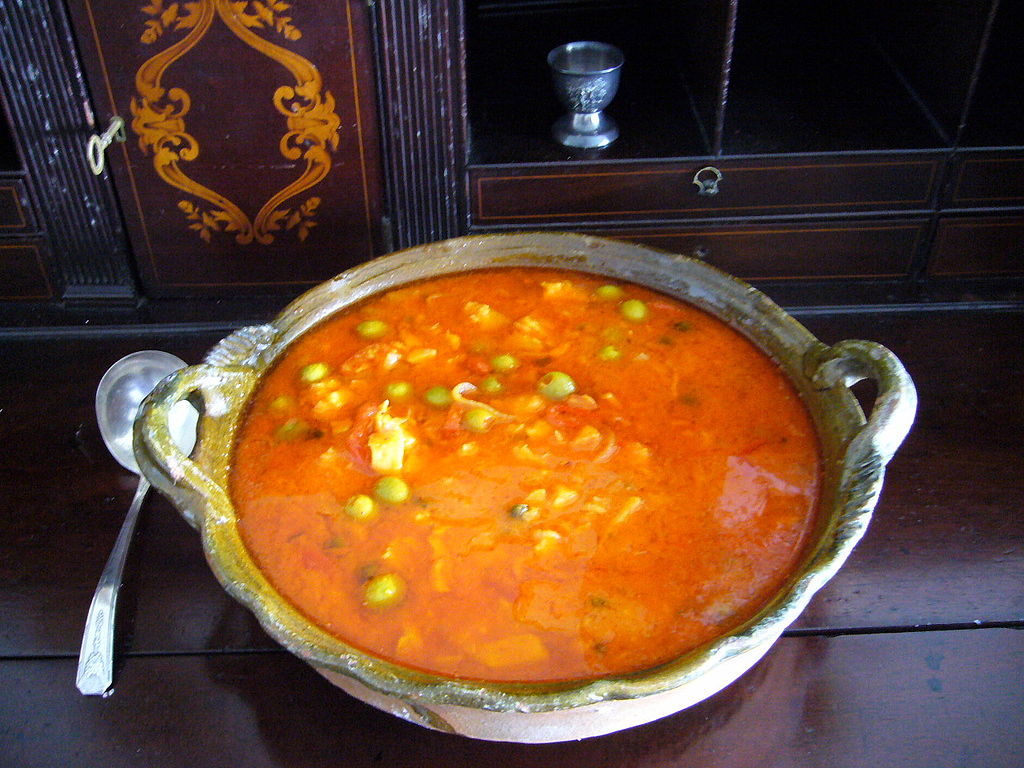
Credit: Luisfi, CC BY-SA 3.0, via Wikimedia Commons
Salt cod is still a traditional Christmas dish in much of the Catholic world, far beyond the native range of the fish. Although it was an everyday staple, salt cod usually got a makeover for important feasts. For instance, the famous Basque dish, Bacalao a la Vizcaína can be found on Christmas Eve tables from Bilbao to Mexico City, but with different preparations. In Portugal Bacalhau com Natas combines salt cod, cream, fried potatoes and onion. and baked in the oven. Other preparations are more simple, like baking the fish with potatoes and olive oil, with or without olives. Baccala can be also fried into delicious fritters or minced for fish cakes (my favorite).
Salt cod is still popular in Portugal, Brazil, Spain and Italy beyond its role in the Christmas feast as well, but it is no longer popular here in the US outside of ethnic enclaves. Many Italian-American families prepare their own baccala before Christmas by salting fresh or previously frozen cod if they cannot find good quality salt cod.
Stockfish-Stoccofisso
Public Domain
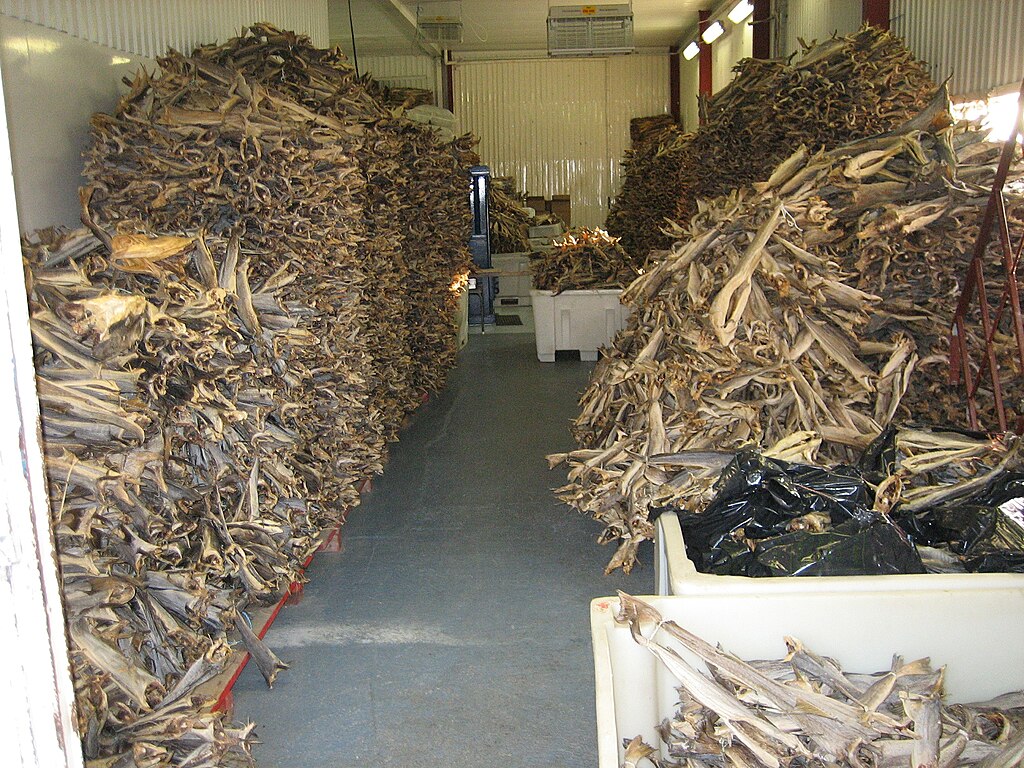
While Italy has salt, but no cod, the Scandinavian nations have plenty of cod but little salt or sun. They got around this problem by air drying their cod, thus creating another staple of the medieval diet you can still find today: Stockfish.
This stuff can be hard as a rock, and can take a bit of work to bring it back to an edible state – even more so than salted cod. After drying and fermenting in the cold, stockfish will last for years. Historically speaking, stockfish could be a little more difficult to get back to an edible state, requiring more fuel to boil the fish to get it soft.
Stockfish, or stoccofisso is also still used in Mediterranean cooking much like salt cod. Along Croatia’s Dalmatian Coast, stockfish goes by the confusing name bakalar, even though it is not salted. Stockfish is served on Christmas Eve with potatoes, parsley, garlic and wine in the traditional Bakalar Na Lesho.
Lutefisk
Credit: Jonathunder, CC BY-SA 3.0 , via Wikimedia Commons
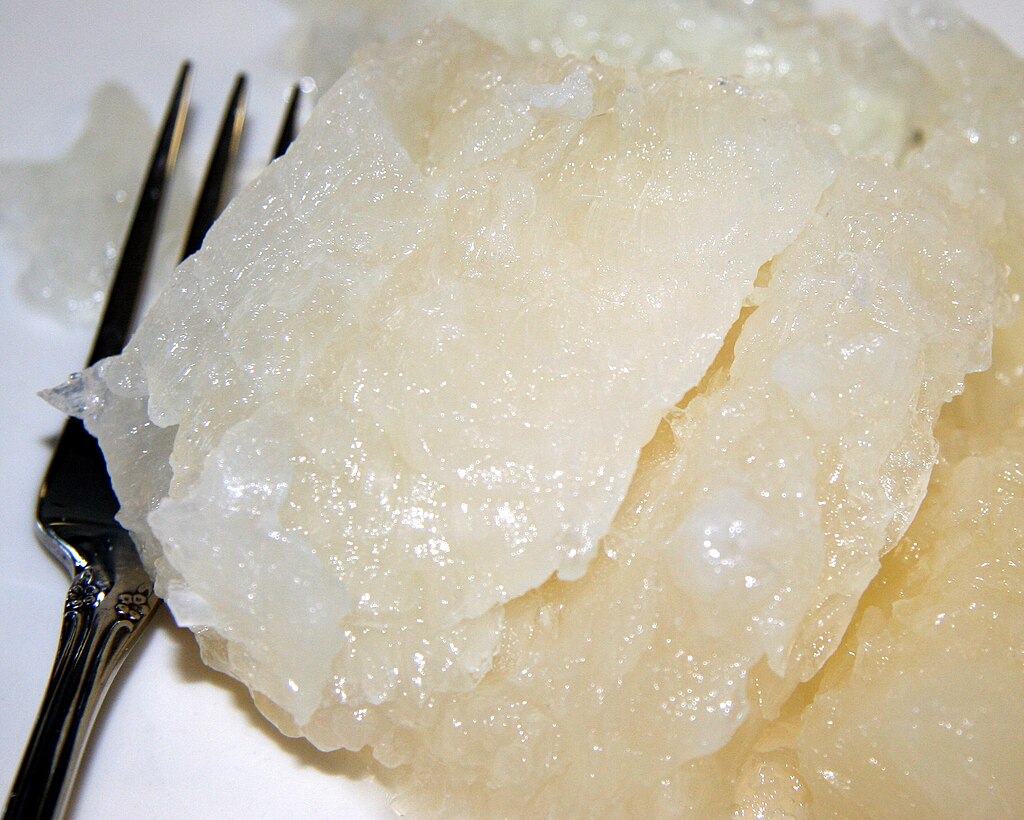
Stockfish is the basis for traditional Scandinavian lutefisk, one of the most notorious of all seafood dishes. Stockfish is first soaked, much like salt cod, but then is cured in a lye solution until it turns a jelly like consistency. This process will take days and the fish will then have to be soaked in fresh water for a few more days to remove enough lye to make it edible.
Some of the purely national dishes of Sweden, as lut-fisk on Christmas-eve, are most extraordinary things, lut-fisk being the stock fish steeped in a solution of potash until in fact decomposition takes place…The smell of the lut-fisk is terrific, but a true Swede clings to his national dish on Julaften as much as any beef eating Englishman does to his.
The Curiosities of Food – 1859
Lutefisk is one of those rare food traditions less popular today in the homeland, but is cherished by the descendants of immigrants. Lutefisk is far more popular and eaten much more often in the American Midwest than say, Sweden. I have asked Scandinavian visitors about lutefisk and the best any of them can give me is that it is traditional and they only eat it during Christmas. Not exactly a ringing endorsement.
The Christmas Carp
Credit: Honza Groh (Jagro), CC BY-SA 3.0 , via Wikimedia Commons
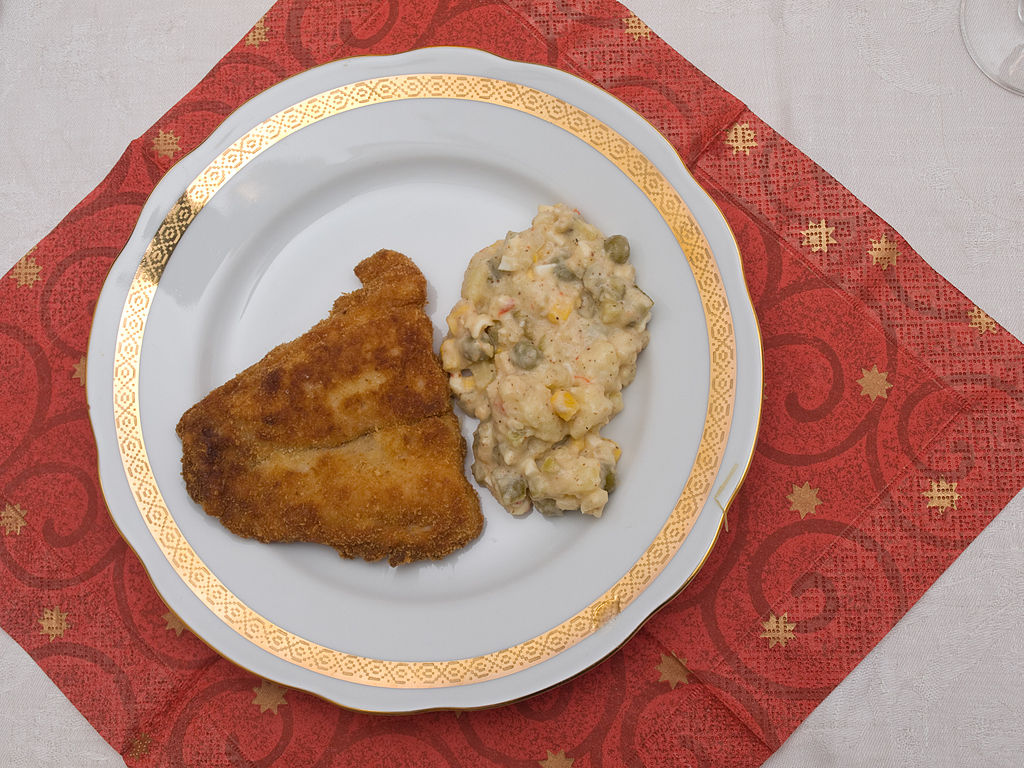
The rivers and lakes of Europe’s interior are home to various edible freshwater fish, some more sought after than others. Carp is one freshwater fish that has historically been popular throughout much of Europe. Carp was one of the first fish raised in ponds for food since Ancient Rome. Carp can grow quite large, which could make for quite a feast in the cold of winter.
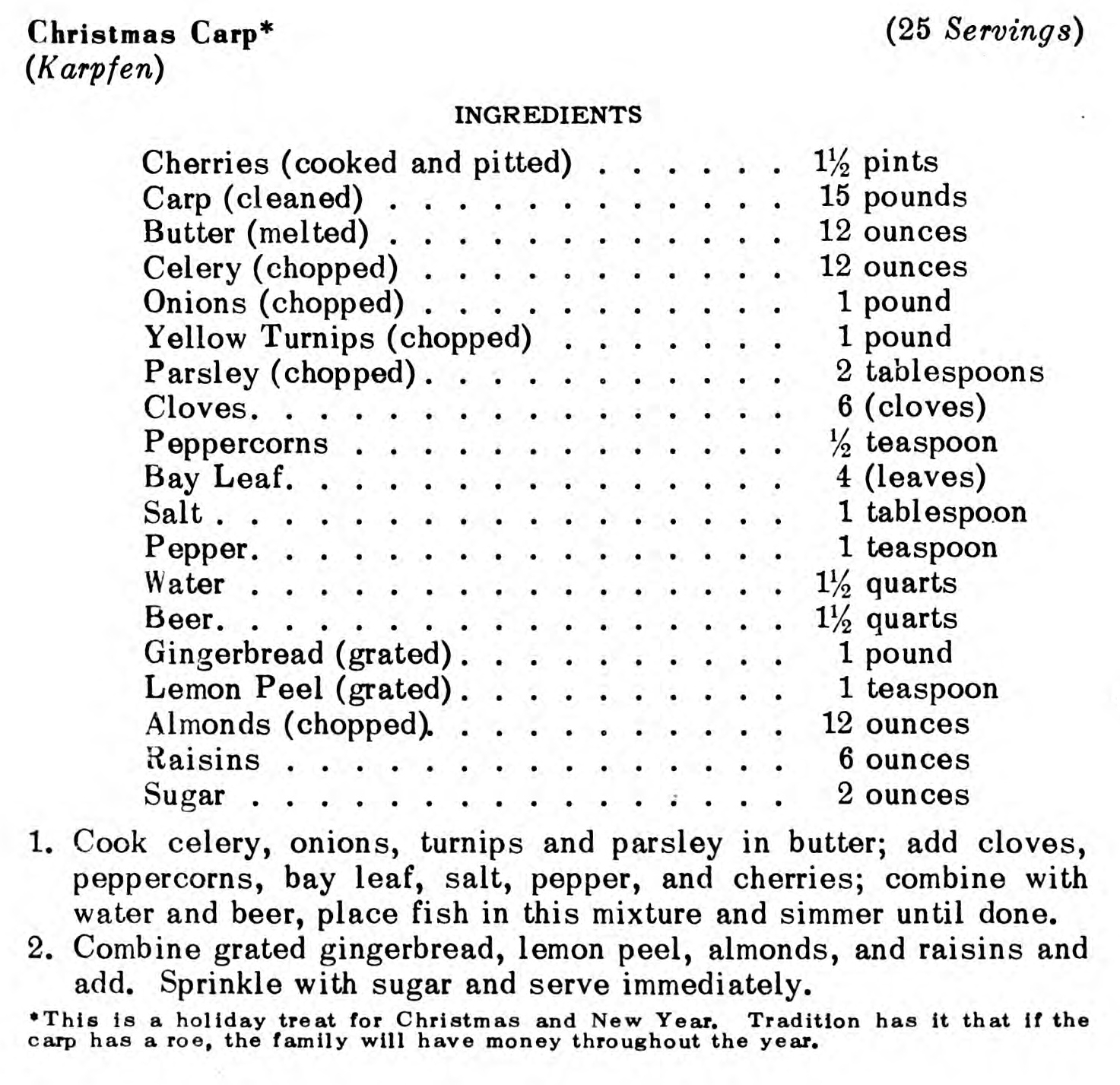
Carp in Germany the traditional dish for Sylvesterabend, or Christmas Eve, and the prices which it commands at that season are very high. Polish Christmas Carp is simmered in Chablis with chopped almonds and currants.
A Book of Food: 1927
German Cookbook for Quantity Service
Carp is far less popular today in everyday life but in Poland, Russia, Hungary and Czechia it is still on the menu, especially in winter. Preparations differ, but carp is still the central ingredient in traditional Christmas Eve dinners of Central and Eastern Europe.
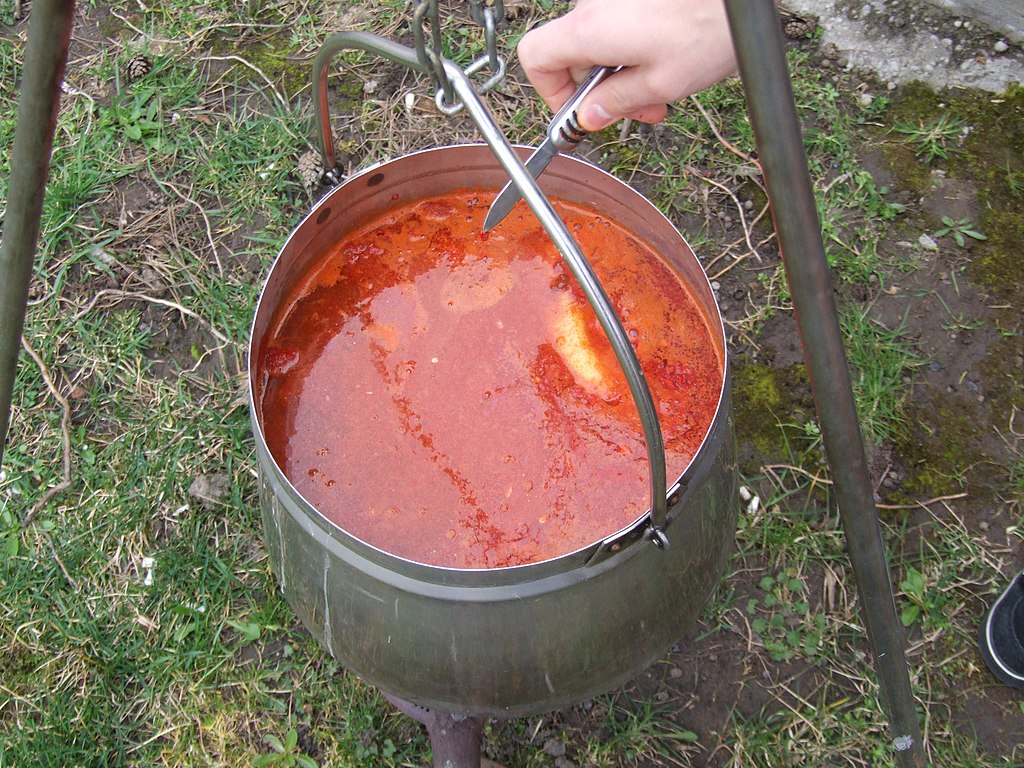
Halászlé – Hungarian Fisherman’s Stew
Credit: Croom, CC BY-SA 3.0 , via Wikimedia Commons
I don’t know much about Hungarian food, but I know they like their paprika. So it is no surprise that one of their traditional Christmas dishes is a hearty, hot, and spicy fish stew that features the national spice. Halászlé was originally made by fishermen along the rivers of Hungary, with locally caught carp, pike, catfish and other river fish. They would cook this spicy stew over a wood fire along the riverbanks. It later became a Hungarian favorite for Christmas dinner, where the bright red color broadcasts its fiery festiveness.
Christmas Herring
Herring was just as important as cod in the medieval diet and also required preservation to make it a trade item. Baltic herring could be found in markets as far away as Constantinople thanks to the trade network of the famous Hanseatic League. The fish is oily so has a very short shelf life unless it is smoked, salted, or arguably the most popular version: pickled herring.
Christmas means pickled herring for a large swath of Europe for those of Germanic, Slavic and Scandinavian ancestry. Pickled herring is pretty common as an everyday snack, but takes on a bigger role during Christmas time, with each ethnicity putting their own spin of the fish.
Julesild
In Norway, Christmas pickled herring is called Julesild and most households will have a jar on the table in season. There are several styles that are popular and all are served with rye bread. One festive style popular in Norway and Denmark is called Kryddersild: pickled herring infused with the flavors of the season: cinnamon, citrus, cloves and other Christmas spices.
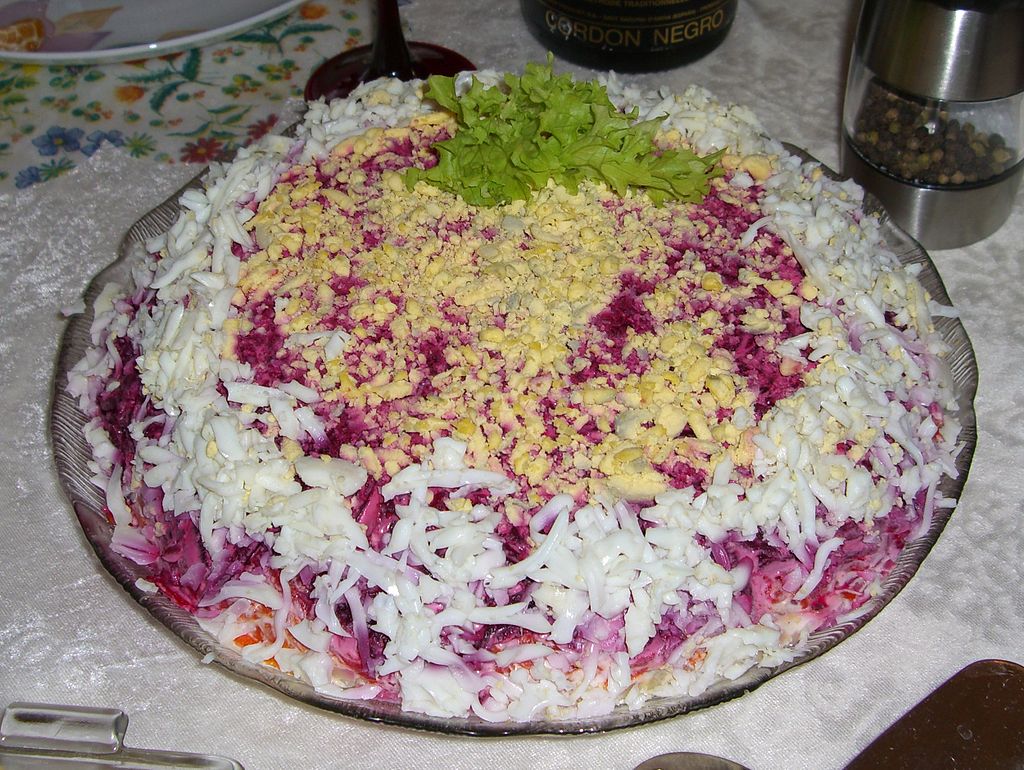
Selyodka pod Shuboy – Herring Under a Fur Coat
Public Domain
In Russia, Ukraine, and other Slavic regions, pickled or salted herring is part of the traditional 12 meatless dishes serves on Christmas Eve. One popular way to serve herring for Christmas, or any other celebration, is this unique layered salad popularly called shuba.
Salted herring is diced and layered with root vegetables, onions, boiled eggs and beets to give the dish it’s signature color. Herring under a fur coat is served as an appetizer and usually accompanied by (what else?) ice-cold vodka.
Famous Fish Pies
A hearty fish or seafood pie could be the centerpiece of a lavish Christmas Eve dinner, or just one of many dishes served in celebration.
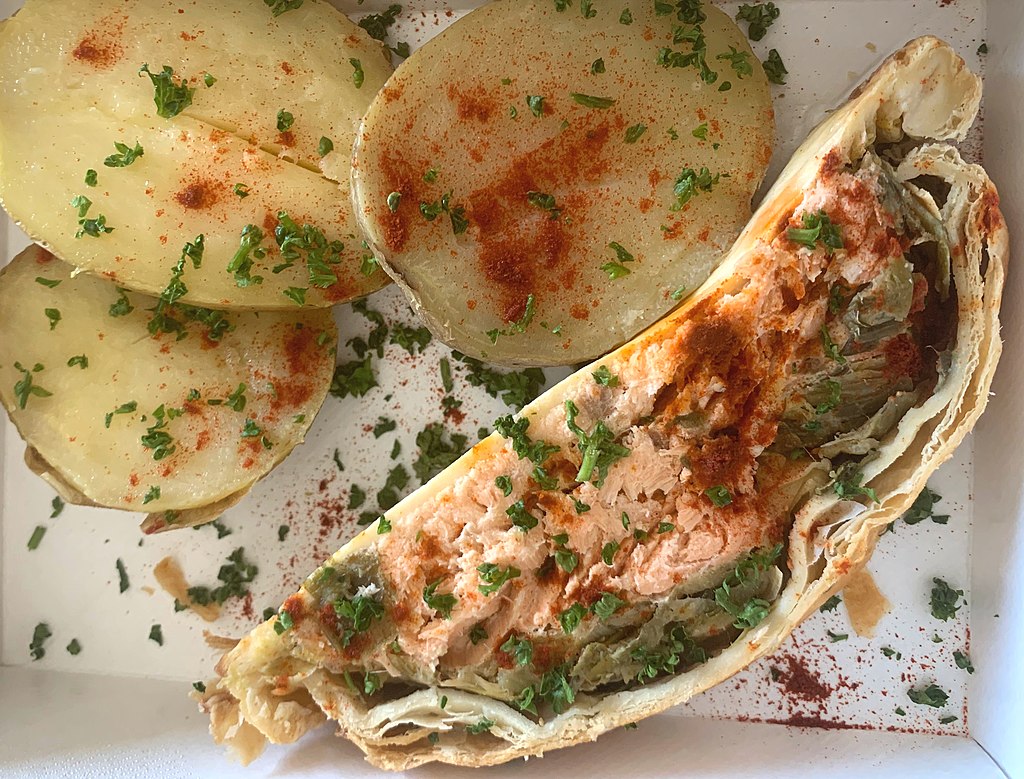
Kulebyaka – Russian Salmon Pie
Credit: Benoît Prieur, CC0, via Wikimedia Commons
This is just one of the many types of fish dishes that may show up for a Russian Christmas Eve dinner. A Kulebyaka is a large oblong stuffed pie that can have a variety of fillings, but is traditionally meatless if served as one of the 12 dishes of the Christmas Eve feast. Salmon is the most common fish used for a meatless version, but sturgeon is also a traditional ingredient.
It is quite an impressive looking dish that was pretty much exclusive to the Russian nobility due to its extravagance. Kulebyaka recipes were so elaborate that the concept was brought to France by the legendary chef, Auguste Escoffier and reborn as coulibiac. The preparations became more affordable, but still impressive during the Soviet era and began to grace the tables of common people.
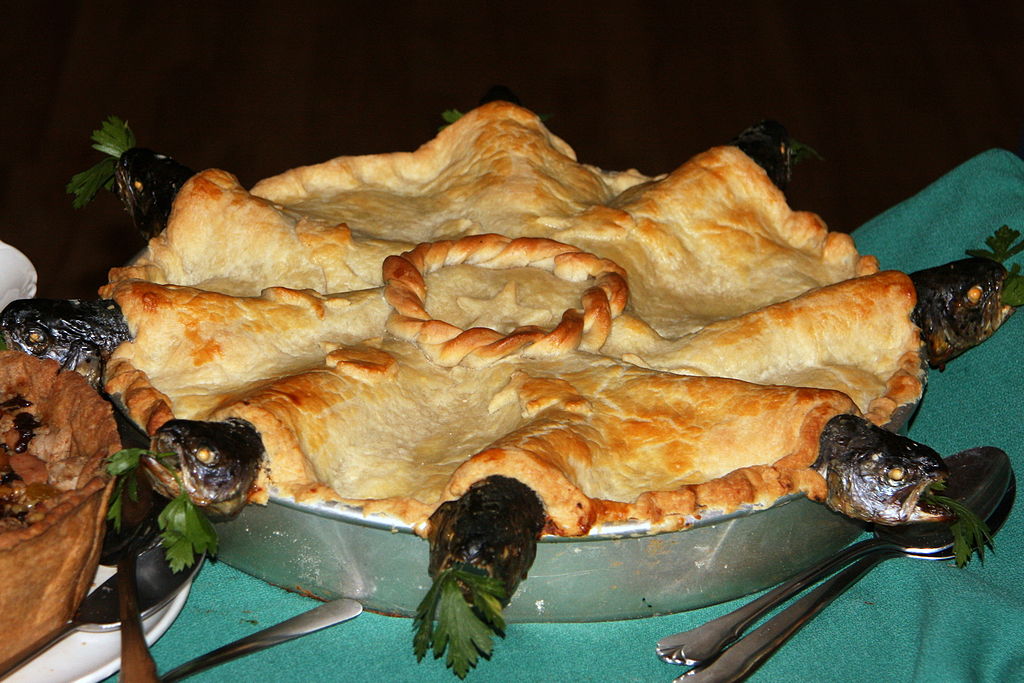
Stargazy Pie – Hogen Ster-Lagatta
Credit: Jonathunder, GFDL 1.2 , via Wikimedia Commons
If there ever was a fish pie made for social media, it’s got to be Cornwall’s famous Hogen Ster-Lagatta, better known in English as stargazy pie. This festive pie of whole Cornish pilchards (sardines) originates from the town of Mousehole and naturally has an origin story steeped in legend. The story dates to the 16th century and a local fisherman named Tom Bawcock, who braved a stormy sea on December 23rd to bring fish to feed the town. The legend says he caught enough fish to feed everyone in Mousehole and the townspeople baked the whole catch into one giant pie.
Tom Bawcock’s Eve has been celebrated in Mousehole with Cornwall’s famous pie ever since. A poem associated with the legend says the pie was made with seven types of fish including dogfish, sand lances, horse mackerel, herring, hake and ling. However stargazy pie is most associated with pilchards. The pie is baked with the heads and often the tails of these large sardines protruding from the crust.
Eel for Christmas Eve

Gennaro D’Amato, Public domain, via Wikimedia Commons
Eel was historically popular during fast days because of its fatty and meaty flavor that replaced meat. Up and down the “boot” of Italy, eels are still a traditional favorite for the Christmas Eve feast. Roasted, stewed or fried, Christmas eel is another seafood tradition that continues to be passed on. Italian markets from Venice to Palermo sell live eels in the days leading up to Christmas.
One style that came to the States with Southern Italian immigrants was Neapolitan fried eels are known as capitone frito. This simple yet delicious recipe still graces Italian-American tables, wherever fresh eels are available and affordable. Prices can be high for eels as their populations are in decline, combined with the world learning about sushi (unagi is grilled eel) increasing the demand. In absence of eels fish like sardines or even baccala can be fried in substitution.
Lamprey – The Scariest Christmas Fish

From: Ichtylogie, ou Histoire naturelle: génerale et particuliére des poissons.
Source: New York Public Library
Lamprey including the Sea Lamprey (Petromyzon marinus) are eel like creatures that are primitive, jawless vertebrates with a cartilage skeleton like sharks and rays. They are known for having a menacing looking sucker-mouth full of large teeth. Is your mouth watering yet?
Lamprey was a popular Christmas dish in Europe and was also served during Lent. It has a much meatier taste and texture and so was popular in times of religious fasting. English royalty has a connection to lamprey, often served during coronations, like the lamprey pie given to Queen Elizabeth II. There is also a famous story of King Henry I dying after overindulging in lampreys. For Christmas, the city of Gloucester was responsible for preparing the royal lamprey pie from Medieval times until 1836.
Take a look at this historic recipe I used in my book: From Head to Tale. If anyone has the guts to make this please let me know.
To Dress Lamprey’s: 1669
At Glocester they use Lamprey’s thus. Heat water in a Pot or Kettle with a narrow mouth, till it be near ready to boil; so that you may endure to dip your hand into it, but not to let it stay in. Put your Lamprey’s, as they come out of the River, into this scalding-water, and cover the pot, that little while they remain in, which must be but a moment, about an Ave Maria while. Then with a Woodden ladle take them out, and lay them upon a table, and hold their head in a Napkin (else it will slip away, if held in the bare hand) and with the back of a knife scrape off the mud, which will have risen out all along the fish. A great deal and very thick will come off: and then the skin will look clean and shining and blew, which must never be flead off.
Then open their bellies all along, and with a Pen-knife loosen the string which begins under the gall (having first cast away the gall and entrails) then pull it out, and in the pulling away, it will stretch much in length; then pick out a black substance, that is all along under the string, cutting towards the back as much as is needful for this end. Then rowl them up and down in a soft and dry napkin, changing this as soon as it is wet for another, using so many Napkins as may make the fishes perfectly dry; for in that consisteth a chief part of their preparation
Then powder them well with Pepper and Salt, rubbing them in well, and lay them round in a Pot or strong crust upon a good Lard of Butter, and store of Onions every where about them, and chiefly a good company in the middle. Then put more Butter upon them, covering the pot with a fit cover, and so set them into a quick oven, that is strongly heated; where they will require three or four hours (at least) baking. When they are taken out of the oven and begin to cool, pour store of melted Butter upon them, to fill up the pot at least three fingers breadth above the fish, and then let it cool and harden; And thus it will keep a year, if need be, so the Butter be not opened, nor craked, that the air get into the fish.
To eat them presently, They dress them thus: When they are prepared, as above said, (ready for baking) boil them with store of Salt and gross Pepper, and many Onions, in no more water, then is necessary to cover them, as when you boil a Carp or Pike au Court bouillon. In half or three quarters of an hour, they will be boiled tender. Then take them and drain them from the water, and serve them with thickened Butter, and some of the Onions minced into it, and a little Pepper, laying the fish upon some sippets of spungy bread, that may soak up the water, if any come from the fish; and pour butter upon the fish; so serve it up hot.
The Closet of Sir Kenelm Digby, Knight, Opened – 1910 ed.

Credit: Rui Ornelas from Lisboa, Portugal, CC BY 2.0 , via Wikimedia Commons
This strange and scary looking fish may not grace many menus here in the US, but lamprey is still sought after in parts of the world. Portugal, Spain as well as Scandinavia, the Baltic States and Russia still consider lamprey a delicacy.
Icelandic Fermented Skate – Kæst Skata

I must thank my friend and fellow researcher Thorgeir for telling me about this famously odorific holiday tradition that gives lutefisk a run for its money. It is Kæst skata, fermented skate similar in stench to the more famous fermented shark called hakarl.
Kæst skata is traditionally served on the feast of Þorláksmessa, held to honor Saint Thorlak on December 23rd. This is a local species of skate – a member of the shark class and related to sting rays – that is fermented by burying in beach sand for half a year. Due to the biology of sharks, skates and rays, they have an ammonia smell shortly after being caught. After sitting in the sand for months the uric acid helps ferment the skate and creating a level of funk even I cannot understand.
When dug out, the pungent smell of ammonia hits the nostrils but apparently intensifies during cooking, filling homes and restaurants across the country in a festive stench. Kæst skata is served with boiled potatoes, rye bread and usually plenty of brennivín – Iceland’s version of aquavit. Although I have never tried fermented skate, my Icelandic friend tells me the bark is much worse than the bite. The smell of Kæst skata may be overpowering, but the unique taste is actually kind of mild.
Not everyone still ferments their own skata in Iceland, many celebrate in restaurants. Others buy the fermented skate and celebrate with family and friends at home, where it is advised to dress in clothes you don’t mind throwing away.
Of course, it is not just Christmas seafood that differs region to region. My friend German over at So List has made a delicious list of traditional Christmas drinks that can really liven up your celebration.
Sources/More Information
Caleva, Harry. German Cookbook for Quantity Service: Authentic Professional Recipes. New York: Ahrens Pub. Co, 1956.
Capitone for Christmas Eve from Italy Magazine
Digby, Kenelm, and Anne Macdonell. The Closet of Sir Kenelm Digby, Knight, Opened. London: P.L.
Warner, 1910
Halászlé recipe from Best of Hungary
Norwegian Pickled Herring Recipes for Christmas from Visit Norway
Simmonds, Peter Lund. The Curiosities of Food: Or, The Dainties and Delicacies of Different Nations Obtained from the Animal Kingdom. R. Bentley, London 1859.
 The Historical Vagabond